I still remember the rush of adrenaline the first time I crossed blades with Sword Saint Isshin. It was 2019, and Sekiro: Shadows Die Twice had just redefined what a boss fight could feel like. Fast forward to 2026, and after hundreds of hours across Elden Ring, its massive Shadow of the Erdtree expansion, and even the mech-fueled chaos of Armored Core VI, I find myself coming back to the same conclusion: nothing has dethroned Sekiro when it comes to pure, heart-pounding boss design. But why? Why does a leaner, more focused game from seven years ago still set the bar that even the colossal Elden Ring couldn't reach?
Let's get one thing straight: Elden Ring is a monumental achievement. Its open world, build variety, and sheer sense of discovery are unmatched. But when the discussion shifts specifically to boss encounters, cracks begin to show. The issue isn't that Elden Ring's bosses are bad – far from it. They're some of the most visually spectacular and lore-rich creations FromSoftware has ever conjured. Just look at the Elden Beast's cosmic grace or the fiery desperation of Messmer the Impaler from the 2024 DLC. But visual spectacle and mechanical brilliance don't always walk hand in hand.
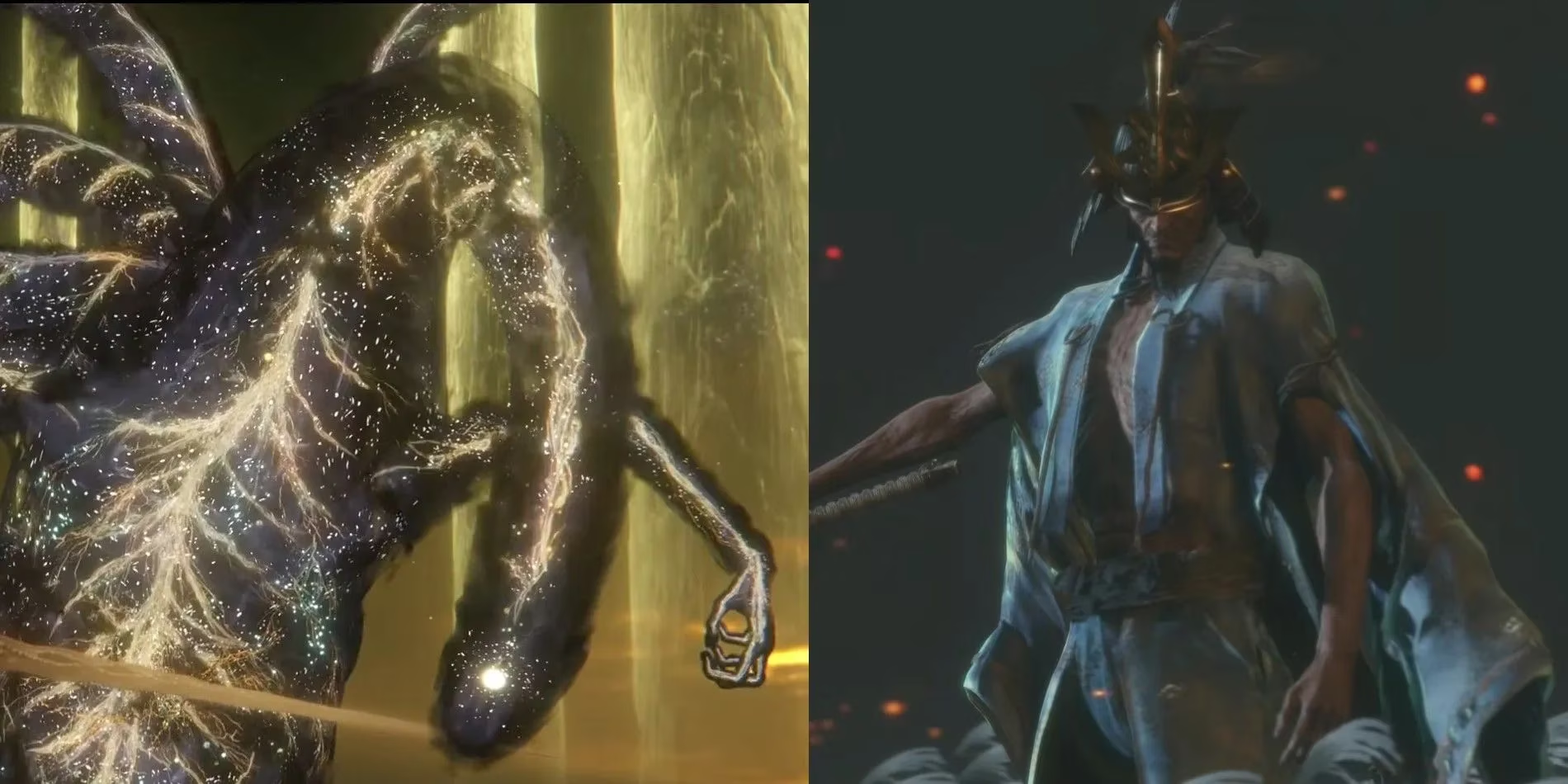
Sekiro's genius lies in its minimalism. It took a single weapon, stripped away stamina management, and built an entire combat system around the clang of swords and the rhythm of deflections. Every boss became a dance – a unique, high-speed waltz that demanded you learn not just when to dodge, but when to stand your ground, parry, and counter. That posture system? It turned fights into duels where constant aggression was rewarded, and hesitation truly meant defeat. Because your attack power scaled meaningfully but never enough to trivialize a boss, you couldn't simply grind levels and come back to steamroll Lady Butterfly. You had to learn her. You had to master the rhythm of her kunai and the cadence of her sweep attacks.
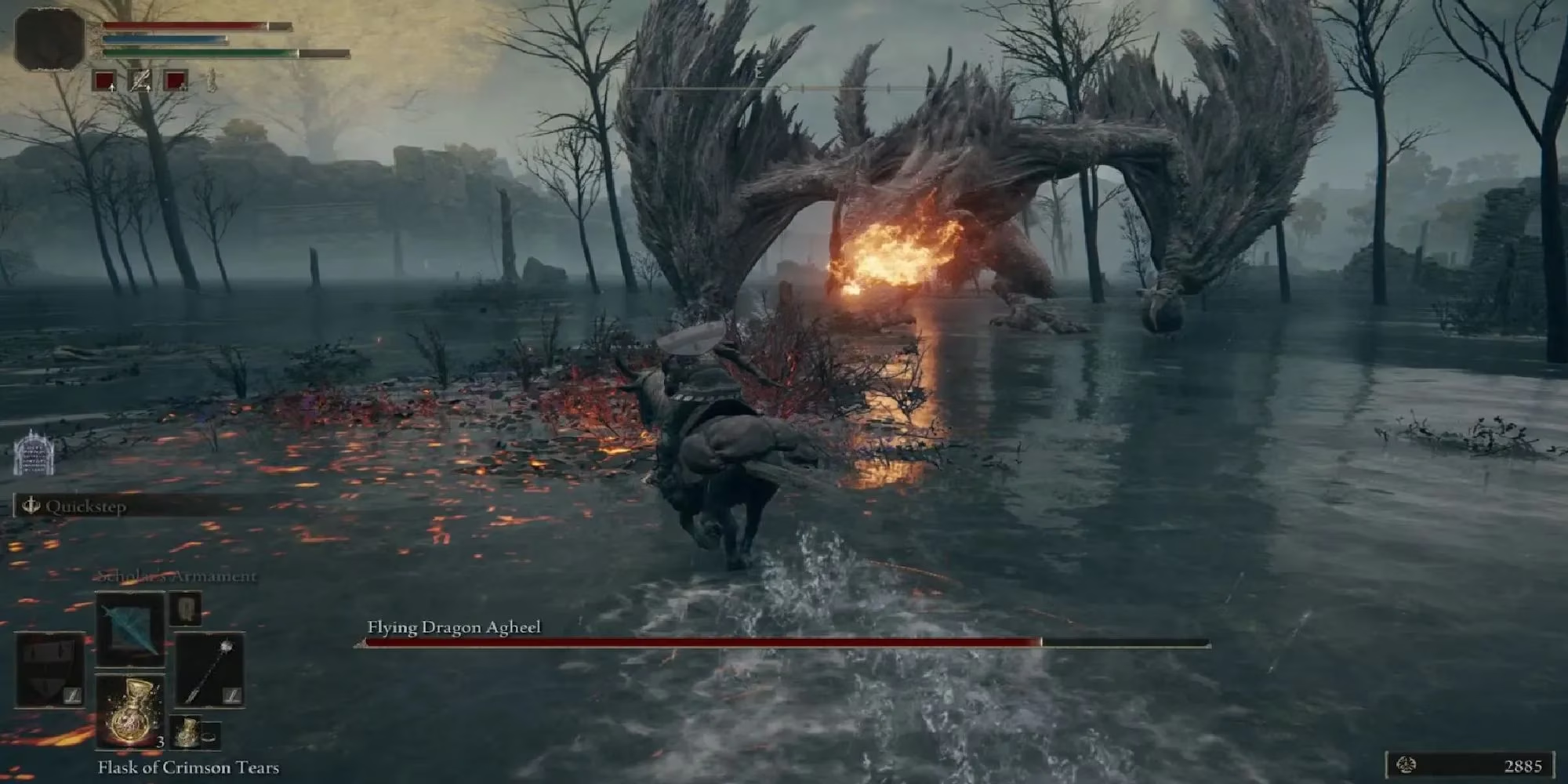
Does Elden Ring offer that same level of enforced mastery? Not really. And that's by design. Elden Ring opens the floodgates of character customization. You can be a hulking greatsword wielder, a nimble spellcaster, or a spirit-summoning tactician. But this diversity comes at a cost. Because the game must accommodate everything from colossal weapons to swift daggers, its boss encounters are often designed around dodging rather than deflecting. Most enemy combos become a signal to roll away, wait for an opening, and punish. Rinse and repeat. Sure, you can parry certain attacks with a shield, but it feels optional, not foundational. The consequence is that many bosses, despite their different appearances, start to blend together in terms of mechanical demand. Does the rhythm of fighting a flying dragon like Agheel feel fundamentally different from a heavily armored knight? Often, no. You're still looking for that same window to dodge and smack.
Now, I can hear the counterargument already: "But what about the no-hit runs? The level 1 challenges?" Yes, those exist, and they're incredible displays of skill. But they are self-imposed constraints. Sekiro baked that perfectionism into its core loop. Getting hit by a boss in Sekiro wasn't just a chunk of health loss; it was a blow to your posture, a signal that you misread the rhythm. The game didn't just encourage you to avoid damage – it practically demanded a flawless performance for the highest difficulty encounters. In Elden Ring, playing cautiously with a ranged build or stacking defensive buffs is a legitimate, developer-intended way to conquer even the so-called "hardest" bosses. That flexibility is wonderful for accessibility, but it inevitably waters down the razor-sharp, one-on-one intensity that Sekiro perfected.
Even the 2024 expansion, Shadow of the Erdtree, sharpened Elden Ring's bosses considerably. Enemies like Rellana or the final boss pushed players to their limits with longer combos and smaller punish windows. For a moment, it felt like FromSoftware was subtly nudging their open-world formula back toward Sekiro's aggressive pacing. But the underlying Dark Souls skeleton remained. You still rolled. You still relied on iframes. The deep, visceral exchange of a deflected flurry of strikes never arrived. And after the credits rolled, you couldn't just walk up to a boss door and challenge them again for fun – a feature Sekiro introduced with Reflections of Strength back in 2020. A game that boasts over 150 boss encounters still forces you to start an entirely new playthrough just to taste your favorite battle once more. That feels like a step backward, doesn't it?
So, in 2026, after the dust has settled on Elden Ring and its DLC, I remain convinced: Sekiro is the apogee of FromSoftware's boss design. It dared to be laser-focused, and in doing so, created a gallery of adversaries that feel more like intimate duels than monstrous hurdles. Until FromSoftware's next project fully embraces a combat system where rhythm, parrying, and relentless pressure take center stage without the crutch of stat grinding, Sekiro will continue to stand alone. And I, for one, will keep returning to that moonlit field, crossing swords with Isshin, knowing that the fight is always as perfect as my last parry.
This assessment draws from VentureBeat GamesBeat, and it helps frame why Sekiro’s “laser-focused” boss design still feels unmatched in 2026: when a game is built around a single combat grammar (deflect timing, posture pressure, and relentless counterplay), every encounter can be tuned like a skill check rather than a build check. By contrast, Elden Ring’s expansive freedom—summons, ranged options, status stacking, and defensive layering—inevitably pushes bosses toward broader, more roll-centric readability so multiple playstyles remain viable, which can dilute that intimate duel-like intensity the blog highlights with Isshin and Lady Butterfly.