In the intricate tapestry of FromSoftware’s Elden Ring, where shattered demigods and cosmic forces collide, the question of a “good” ending has lingered like a stubborn ember since the game’s release. Now, in 2026, as the community continues to dissect every thread of lore, one conclusion stands unwavering: Ranni’s Age of Stars is the sole morally sound resolution. This ending is not merely a gentle fade to black; it is a deliberate reweaving of reality, severing the puppet strings that the Outer Gods have pulled for eons. It offers something that the Lands Between has never truly known—freedom from an intrusive divine hierarchy.
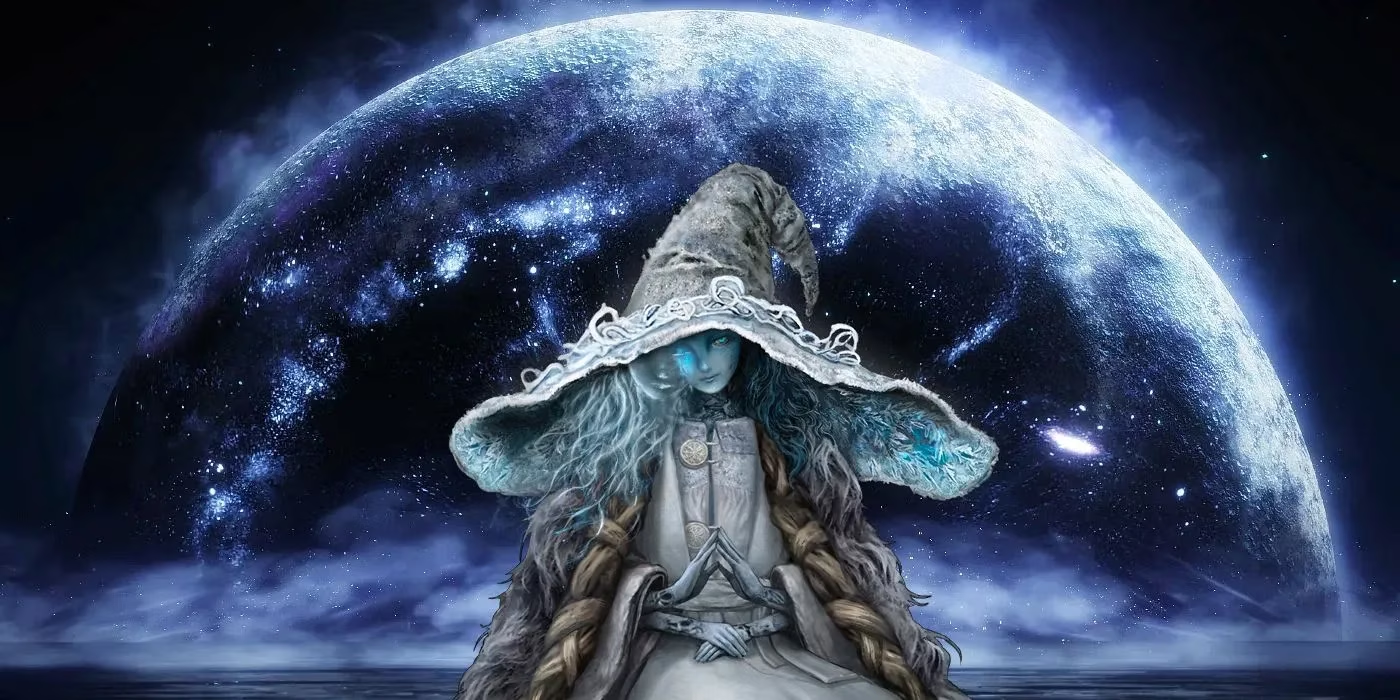
The Moral Complexity of Ranni’s Vision
Ranni the Witch is a figure shrouded in enigma and suspicion. Her scheming, the dark betrayal of her Two Fingers, and her aloof demeanor can easily paint her as just another power-hungry Empyrean. Yet beneath that frosty exterior lies a philosophy that is startlingly selfless by the standards of the Lands Between. She seeks to establish an order “of the stars and moon of the chill night,” keeping the divine far from mortal affairs. This is not a grab for control; it is an act of cosmic retreat, a quiet dismantling of the invasive Greater Will’s architecture. Unlike the Age of Fracture, which merely patches the broken Elden Ring and perpetuates a crumbling status quo, Ranni’s design aims to grant every soul the capacity to shape its own fate without the meddling of unseen deities. Her ending is the only one that does not simply reupholster the same rotting throne; it tosses the throne out the window entirely.
Where other endings demand a Lord to rule, Ranni’s path reduces the very concept of a singular, visible order. It is as if she replaces a blinding, unblinking sun with a soft, indifferent moonlight—a profound shift from imposition to allowance. The typical Tarnished’s journey ends in domination, but with Ranni, it ends in a quiet liberation. Her vision transforms the godly apparatus into a distant constellation, present but no longer suffocating, like a lighthouse whose beam guides without gripping the helm.
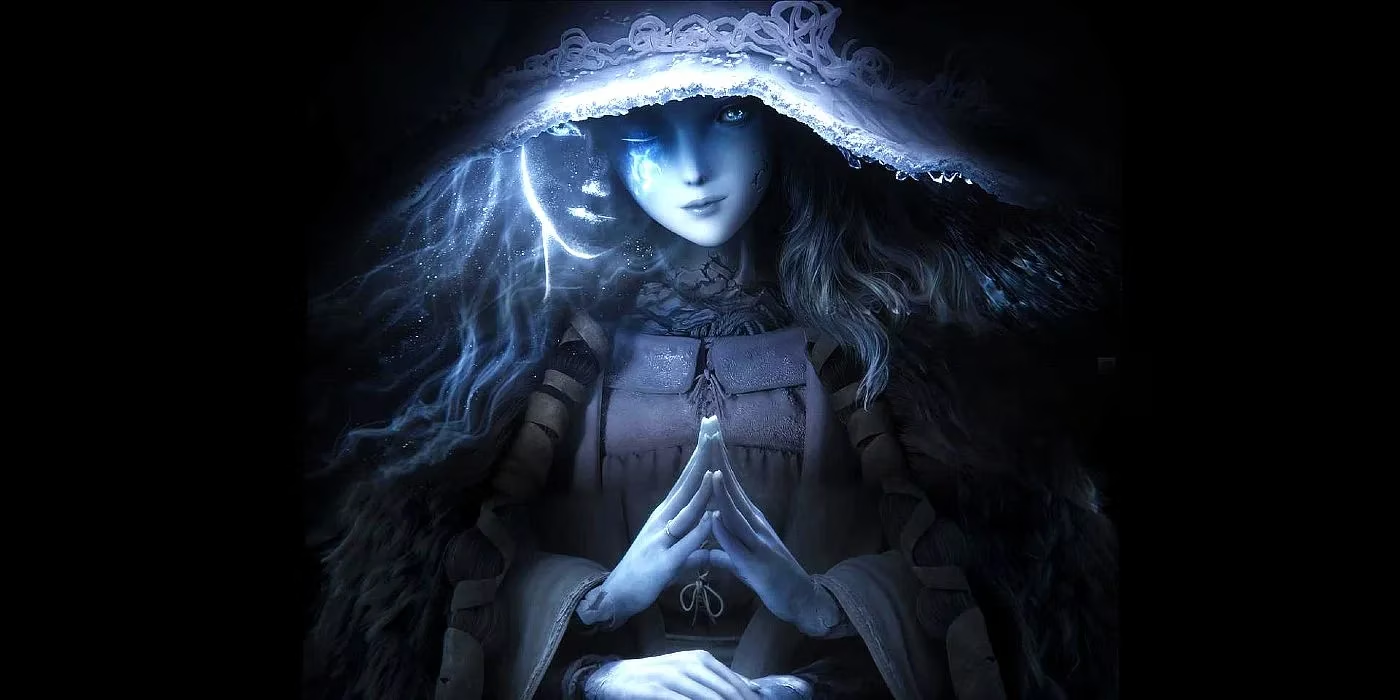
A Translation’s Revealing Nuance
The depth of Ranni’s intentions becomes even clearer when examining the original Japanese script. A literal translation of her declaration reads: “Even if life and souls are one with [my] order, it could be kept far away. If it was not possible to clearly see, feel, believe in, or touch the order. That would be better.” This wording reframes her goal as a gentle, almost philosophical separation. Her order becomes an intangible framework, a principle rather than a prison. She understands that the root of the Lands Between’s suffering is the unbearable closeness of the divine, a suffocating embrace that turns faith into tyranny. In contrast, the English localization softens this nuance, but the core remains: she wishes to pull the gods to arm’s length, to make their influence as imperceptible as a distant star.
This intentional ambiguity is not weakness; it is the entire point. By making the order untouchable, she prevents it from being corrupted, manipulated, or used as a bludgeon. It is a far cry from the Age of Order, which refines the Golden Order into a more rigid, albeit fairer, cage. Ranni’s ending does not refine the cage—it dissolves the bars.
The Spectrum of Endings: From Chaos to Cosmic Silence
Elden Ring offers six main endings, each a different flavor of apocalypse or renewal. Arranged from worst to best, they form a moral gradient that is surprisingly clear-cut:
| Ending | Moral Position | Key Outcome |
|---|---|---|
| Lord of Frenzied Flame | Unambiguously evil | Total destruction; return to primordial chaos |
| Blessing of Despair | Deeply malevolent | Eternal curse spreads across all life |
| Age of Fracture | Neutral, stagnant | The shattered ring is mended, but nothing changes |
| Age of Order | Appears hopeful, but restrictive | Perfected Golden Order, eliminating free will |
| Age of Duskborn | Partially restorative | Natural death cycle restored, but divine influence remains |
| Age of Stars | The only true good ending | Free will bestowed, Outer Gods’ intervention removed |
The Lord of Frenzied Flame ending is a pyromaniac’s final masterpiece—a roaring inferno that reduces the world to ash under the banner of erasing all suffering. Even Melina, the Tarnished’s steadfast companion, desperately pleads against this path, her warnings echoing long after the screen fades to orange. The Blessing of Despair, brought about by the loathsome Dung Eater, does not destroy but contaminates, weaving a curse into the very fabric of rebirth, ensuring that every generation inherits a festering misery.
The Age of Fracture simply keeps the broken status quo, a decision so passive it feels like a shrug in the face of cataclysm. The Age of Order, while tempting, merely snaps a more perfect collar around the neck of the world. The Age of Duskborn restores the cyclical rhythm of life and death by reintroducing Destined Death, but it fails to address the fundamental problem: the Greater Will’s oversight remains, ready to warp the cycle again.
Why Age of Stars Illuminates the Path
Ranni’s ending is a lone lighthouse in a storm of divine meddling. It does not simply rearrange the furniture of a broken world; it exiles the landlord. By taking her order and herself into the chill night sky—a thousand-year voyage away from the earth—she ensures that the Lands Between can finally breathe without a god’s thumb pressing down on its windpipe. The people are left not with commandments, but with the quiet space to choose, to believe, to fail, and to grow. This aligns with the game’s running theme that the greatest tyranny is not a monster, but a system that denies the possibility of self-direction.
In 2026, revisiting this ending feels more resonant than ever. It reminds players that true heroism sometimes looks like stepping away from the throne rather than seizing it. Ranni does not rule; she recedes. And in that recession, she offers the Lands Between its first real chance at an uncursed future. The stars she venerates are not controlling minds; they are distant, beautiful, and utterly indifferent—exactly what a wounded world needs.