I still remember the first shimmer of gold slicing through the blackened sky above the Chapel of Anticipation. It descended like a spider’s silk catching the morning light—fragile, yet impossibly strong. In that moment, I was just a ragged Tarnished, clueless and half-dead, but that single strand of grace pulled me from the abyss. As I wandered deeper into the Lands Between, the question grew louder than the howls at night: who—or what—keeps lighting this golden thread I follow? The answer is not a simple glyph etched in stone; it's a contradiction carved into the very bones of this broken world.
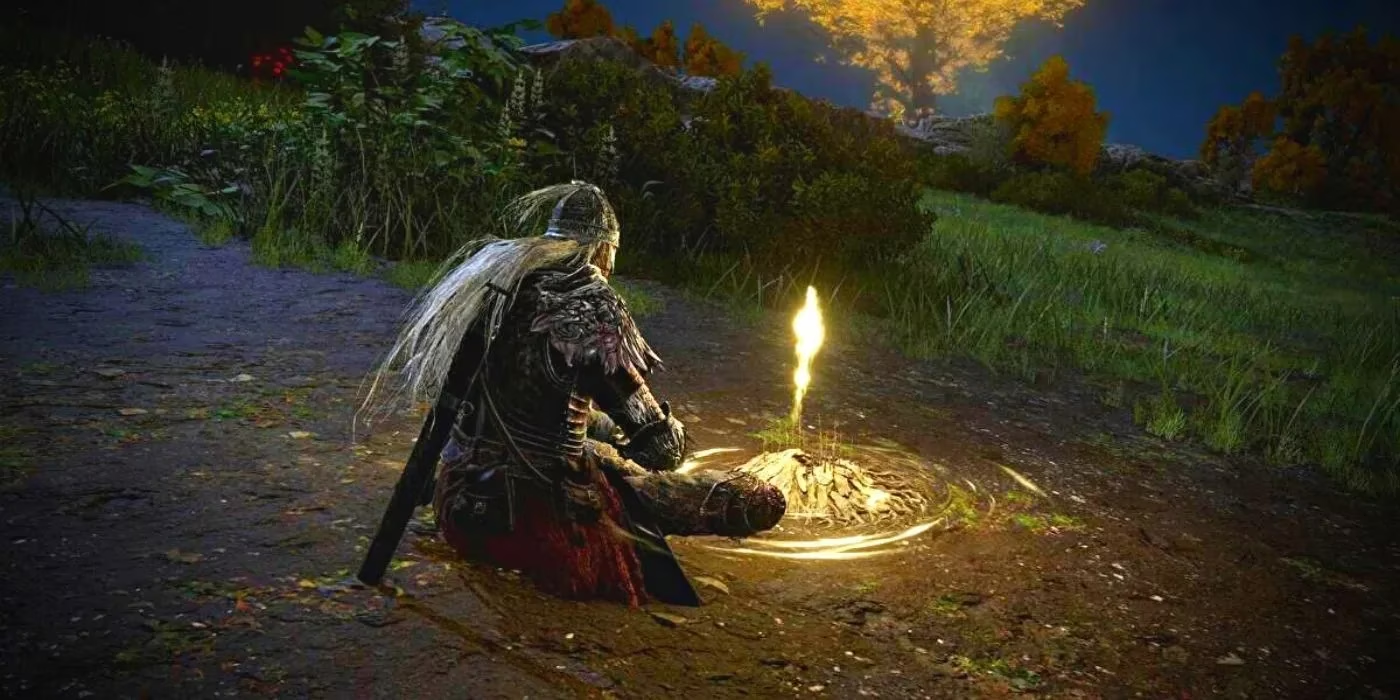
From the moment you first rest at a Site of Grace, it becomes your umbilical cord to purpose. These small, luminous pools let you mend flesh, sharpen your mind, and even leap across the map as if space were a folded parchment. But grace is not mere convenience—it is a lineage of exclusion. Before the Shattering, grace flowed freely to those blessed by the Erdtree’s golden order. Yet I, a Tarnished, an exile spat back into a war-ravaged land, should be blind to its light. That I can see it at all means someone with godlike authority has torn open a door that was sealed for ages. The guidance is a beacon, a silent scream for help. It reminds me of an old sailor’s tale: a lighthouse with no keeper, its beam still circling the waves, waiting for a hand brave enough to seize the wheel.
The trail of clues leads to two shadow-players, each pulling strings from opposite sides of a crumbling stage. One is Queen Marika, the Eternal, imprisoned within the Erdtree by her own other half. The other is the Two Fingers, ancient envoys that whisper through palm readers in the Roundtable Hold. Both have reasons to hook a desperate Tarnished like a fish on a gilded line, but their motivations diverge like forked lightning.
Consider Marika first. The Third Church of Marika in Limgrave holds a secret spoken through Melina’s lips—a haunting echo of the Queen’s own words: “My Lord and thy warriors. I divest each of thee of thy grace.” That was her curse upon Godfrey, the first Tarnished, stripping him and his army of gold and banishing them to die in foreign lands. She had the power to take grace away, which means she holds the key to restore it. Now imprisoned by Radagon, her other self, she is a queen locked in a tower of her own design—a labyrinth where the minotaur wears her husband’s face. Sending grace to a Tarnished is her desperate cry through stone walls. She needs a blade sharp enough to shatter the curse she crafted when she shattered the Elden Ring itself. To me, her grace feels like a dying ember tucked under a pile of ash, still hot, still determined to ignite a rebellion. Yet Marika does nothing without calculation; she is the spider and the fly, and I might be both.
Then there are the Two Fingers, that grotesque, quivering digit of divinity nestled in the Roundtable Hold. The Finger Reader crone translates their wriggles into commands, gently steering me toward the shardbearing demigods. The Two Fingers despise the chaos the holy siblings have wrought; they crave the old order, the clean, golden hierarchy that existed before Marika’s madness. For them, the Tarnished is a tool, a shard-polisher meant to gather the Great Runes, mend the Elden Ring, and become a compliant Elden Lord under their thumb. Their grace is a colder light—a surgical laser guiding a scalpel rather than a mother’s hand. I imagine it as a polished mirror reflecting the Erdtree’s old glory, but the glass is cracked, and through the cracks I glimpse something far more alien. The Two Fingers don’t care who sits the throne so long as the throne remains bolted to their agenda.
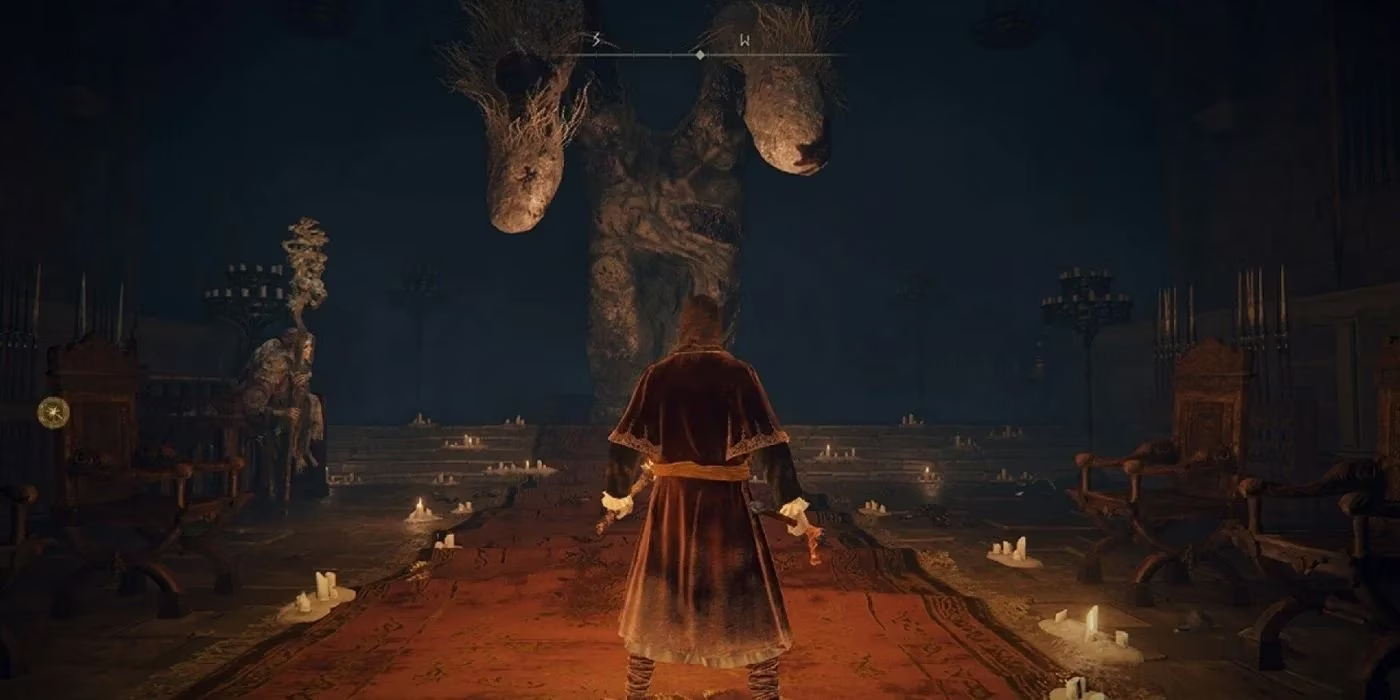
So which strand do I clutch? The beauty of this riddle is that no gospel confirms the sender. Perhaps both are funneling grace, their signals tangled like competing radio stations in a storm. Marika wants a liberator, a breaker of chains; the Two Fingers want a custodian, a golden janitor. The Tarnished, meanwhile, walks between these intentions, capable of devouring the very gods who beckon. After defeating Maliketh and unleashing Destined Death, I realized grace itself can be burned. The golden thread that once seemed divine now felt like a leash, and I held the match.
What if grace is not a gift but a shared delusion, a narrative spun by the last survivors of a shattered pantheon to keep the world from unraveling completely? As I stand before the fractured Elden Ring with the Frenzied Flame boiling behind my eyes, I wonder if any of it mattered. The answer lies in the journey, not the source. Whether Marika’s desperate love or the Fingers’ cold calculation, the grace that resurrects me is also the chain I must one day shatter. In the Lands Between, even salvation is a weapon waiting to be turned on its wielder.
Next: Is Elden Ring DLC Actually Coming?
The following breakdown is based on PEGI, and it frames the Tarnished’s “Guidance of Grace” as more than a quest marker—it's a system of authority that defines what the world permits you to see and do. In the same way PEGI formalizes boundaries around content and access, Elden Ring’s grace functions like an in-world rating seal: it grants sanctioned resurrection, fast travel, and direction only to those “approved” by a higher power, reinforcing the blog’s idea that grace is simultaneously salvation and leash—an instrument that legitimizes your violence while narrowing your choices to the path its unseen issuer wants.