I used to think role-playing games were supposed to make me feel heroic. You know, gather a party, learn a fire spell, save a village, maybe romance someone with excellent hair. But somewhere between a cursed estate and a starship full of hive-minded worms, I realized the RPGs that stick with me longest are the ones that make me afraid to walk down my own hallway at night. Even here in 2026, when every big-budget game wants to be an always-online extraction shooter, there's still nothing quite like a horror RPG. The best ones don't just scare you. They crawl under your skin, pretend to delete your save data, and ask you to keep going anyway.
Here are the horror-based RPGs that still haunt me, based on the ones critics have celebrated most loudly over the years.
| Game | Metacritic Score | Why It Refuses to Leave My Brain |
|---|---|---|
| S.T.A.L.K.E.R.: Shadow of Chernobyl | 82 | The Zone itself feels alive |
| Shin Megami Tensei V | 84 | Demons make very persuasive roommates |
| Darkest Dungeon | 85 | Stress is a stat, baby |
| Shadow Hearts: Covenant | 85 | Judgement Ring plus cosmic dread |
| Omori | 87 | A sweet-looking game about trauma |
| Eternal Darkness: Sanity's Requiem | 92 | It once faked a save wipe and I almost cried |
| System Shock 2 | 92 | Space parasites with a hive mind |
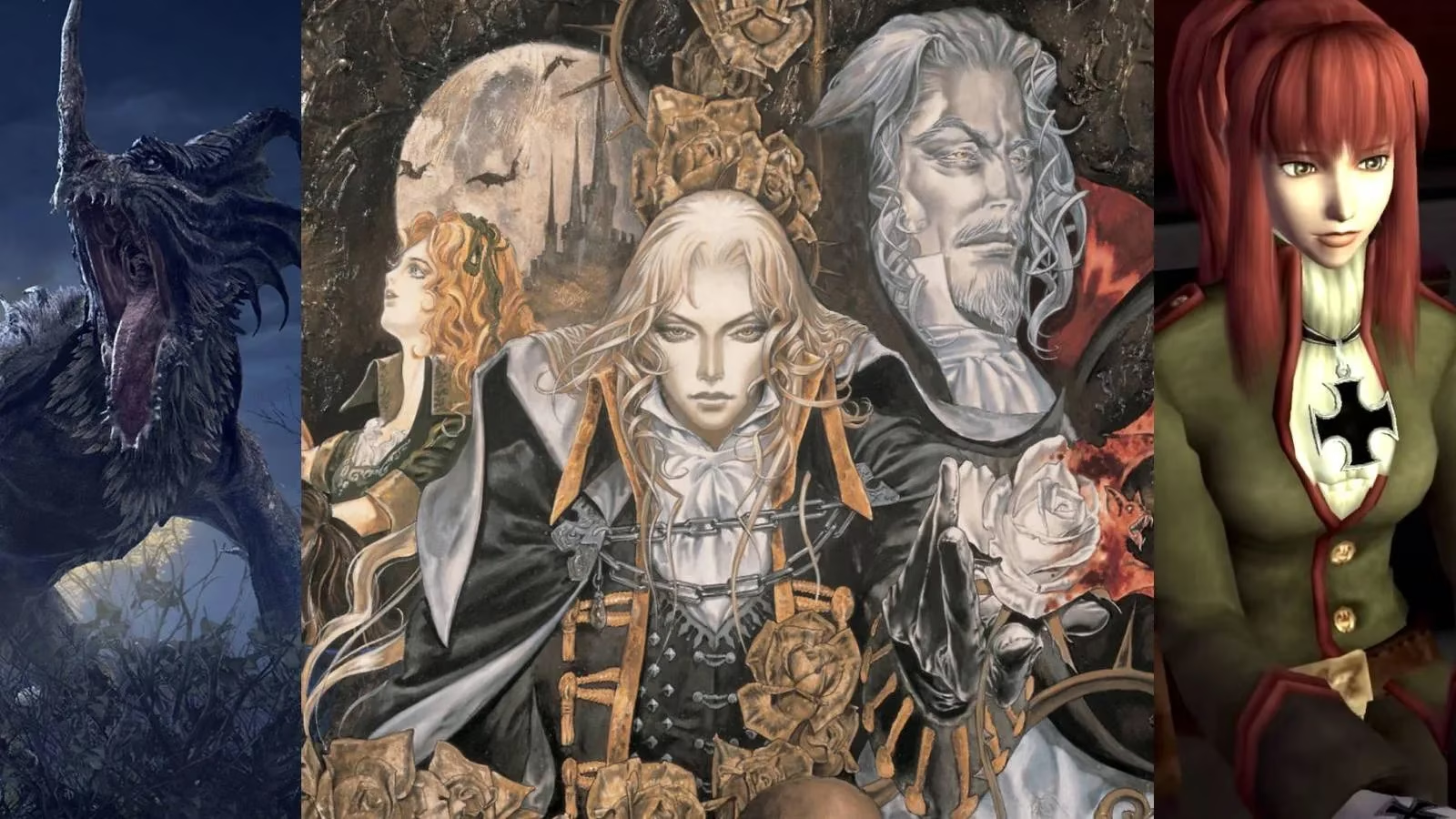
| Castlevania: Symphony of the Night | 93 | The castle breathes |
| Diablo | 94 | Tristram never stops screaming |
| Elden Ring | 96 | George R. R. Martin helped build a nightmare |
S.T.A.L.K.E.R.: Shadow of Chernobyl — The Zone knows things
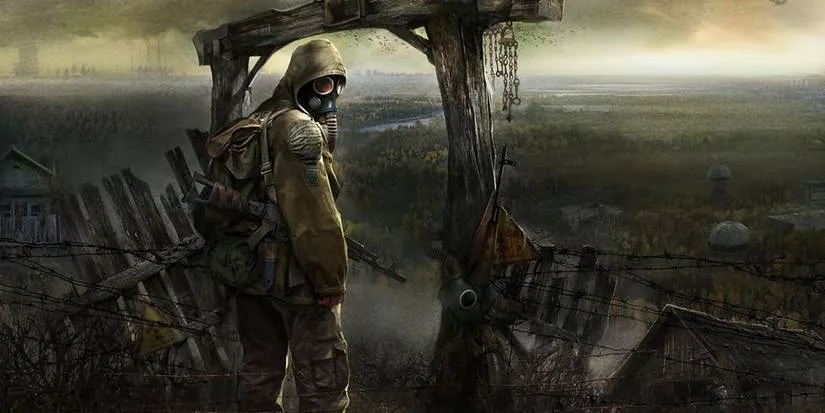
My first trip into the Exclusion Zone felt wrong in the best way. As the Marked One, I woke up with no memories and a rifle that might as well have been a toy. The Zone isn't just a setting in S.T.A.L.K.E.R.: Shadow of Chernobyl; it's a living thing that chews up physics and spits out anomalies. Local wildlife changed, gravity took coffee breaks, and every artifact you grabbed felt like it was watching your back pocket.
Even now, I think about the monolith at the center of the Zone — the one rumored to grant wishes. Sure, okay, a wish-granting rock in the middle of radioactive hell. What could go wrong?
Shin Megami Tensei V — My worst negotiation was with a demon
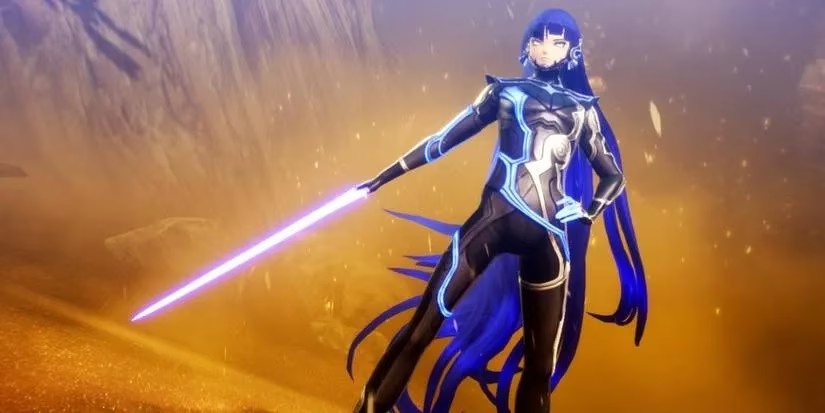
The Megami Tensei series has always had a strange relationship with horror. It started back in 1987 with Digital Devil Story: Megami Tensei, and by the time I got to Shin Megami Tensei V, I understood why those earlier games scared people enough to get banned internationally. Da'at, that alternate ruined Tokyo, isn't just post-apocalyptic. It's lonely. It hums.
When the protagonist fused with Aogami to become a Nahobino, I felt powerful for maybe five minutes. Then a demon opened its mouth and offered me a deal I absolutely should not have accepted — and yes, I accepted it anyway. Horror in this franchise often sounds like customer service on a hotline run by nightmares.
Darkest Dungeon — The dungeon laughed at my optimism
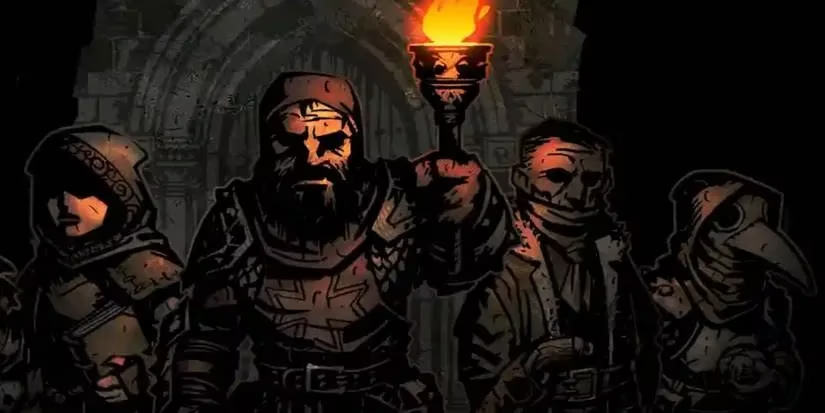
If you've ever thought your RPG party needed more mental breakdowns, Darkest Dungeon is ready for you. I inherited an estate. Cool, right? Less cool: the previous owner unleashed world-ending evils from the basement. My job was to recruit disposable heroes and send them into randomly generated catacombs until they either became legends or developed crippling paranoia.
One memorable run, my highwayman got so stressed he gained an affliction that made him refuse healing. Honestly? Same. The stress system is the real final boss. And the dungeon knows it.
Shadow Hearts: Covenant — A gothic fever dream with timing windows
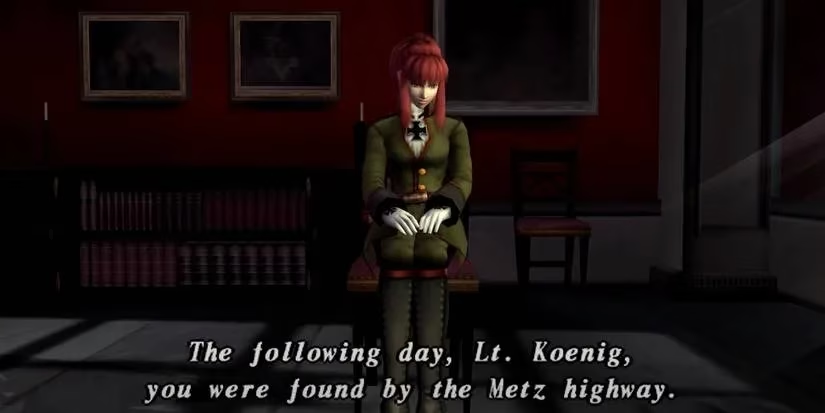
There's something uniquely unnerving about Shadow Hearts: Covenant. It mixes historical references, gothic aesthetics, and cosmic horror in a way no other JRPG has ever managed to copy. Playing as Karin Koenig alongside Yuri, I spent half the game trying to stop a terrorist group and the other half wondering if the moon was judging me.
And then there's the Judgement Ring. Imagine turn-based combat, but every action requires you to stop a spinning pointer at the exact right moment or your attack whiffs while a monster giggles at you. Yeah, that aged well.
Omori — The cutest game about dread
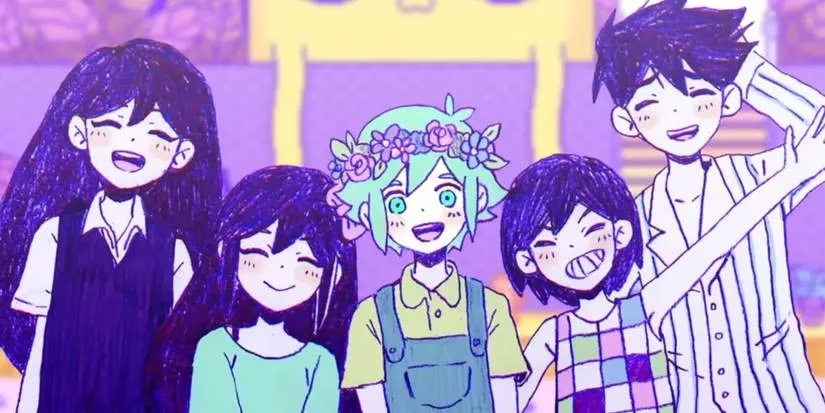
By 2026, I still haven't fully recovered from Omori. On the surface, Sunny's dream world as Omori looks like pastel fun. Inside, it's a psychological horror story about anxiety, depression, and trauma. The game asks one horrible question: what did Sunny do, and can he face it?
Exploring both the dream world and the real world, I kept telling myself I could fix things. Depending on what I did, I absolutely did not fix things. Some endings left me staring at the ceiling for a while.
Eternal Darkness: Sanity's Requiem — The game gaslit me
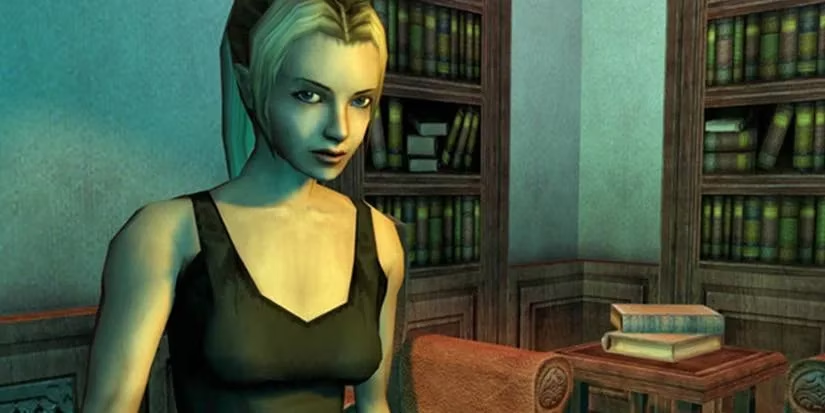
Alexandra Roivas walked around that family estate reading the Tome of Eternal Darkness, and I walked behind her like a nervous ghost. Eternal Darkness remains legendary for one specific reason: sanity effects. When my character's sanity dropped too low, the game started lying to me. It showed me items that weren't real. It made the screen act broken. At one point, it seemed to delete my save data, and I nearly threw my GameCube into the ocean.
That fourth-wall-breaking nonsense should be required in more horror games. It made me distrust the hardware, not just the haunted house.
System Shock 2 — Space is just a big wet basement
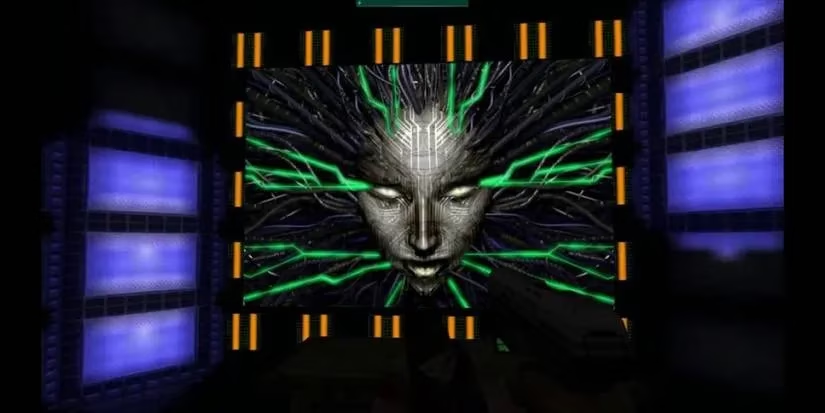
On the Von Braun, I woke up as an amnesiac soldier with one ally on the radio and a lot of wet organic sounds in the walls. The Many, a parasitic worm hivemind, had taken over the crew. Their voices spoke in unison, which is exactly as pleasant as it sounds.
System Shock 2 shaped how I think about atmosphere and sound design in horror RPGs. Every audio log, every distant skitter, every "we are..." from The Many made me want to crawl back into cryo and stay there.
Castlevania: Symphony of the Night — The castle had a pulse
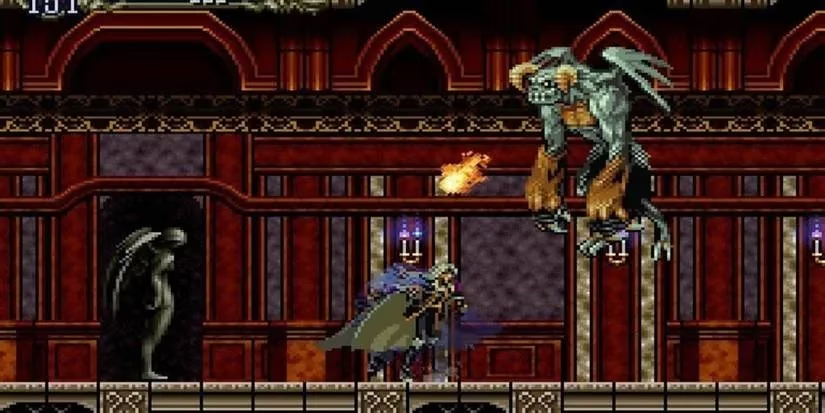
Alucard entered Dracula's castle to destroy it, and I followed because the castle genuinely felt like it was breathing. Hallways rearranged themselves. Enemies looked at me before I looked at them. Richter Belmont wasn't himself, and Shaft was doing what villains named Shaft usually do: puppeteering everyone.
This game helped define the metroidvania genre for good reason. It's not jump-scare horror. It's slow, gothic dread that makes you wonder if the castle wants you there.
Diablo — Tristram never stopped screaming
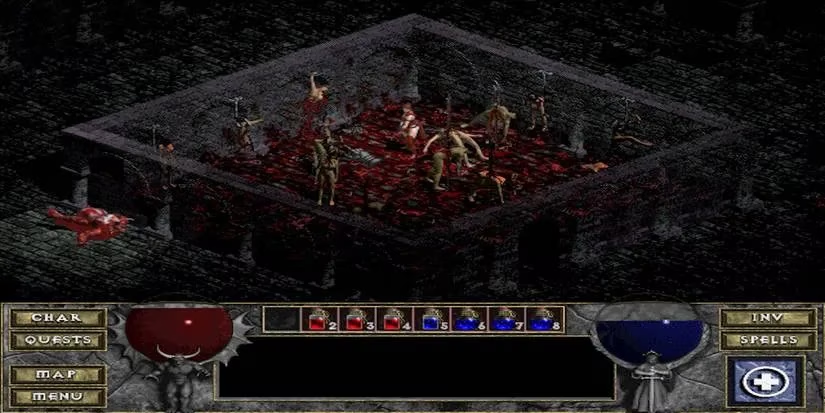
Before loot and seasonal builds turned the franchise into a numbers machine, the original Diablo was a lonely gothic horror story. The village of Tristram sat under a weight I could feel through my monitor. Archbishop Lazarus had been manipulated, the king and prince were possessed, and the cathedral basement went down much farther than I wanted it to.
The sound design alone deserves awards. Those random dungeons, the guitar strings, the silence — it all built something that still tingles my spine in 2026, even with all the modern remasters trying to sell me convenience.
Elden Ring — The prettiest nightmare I've ever ridden through
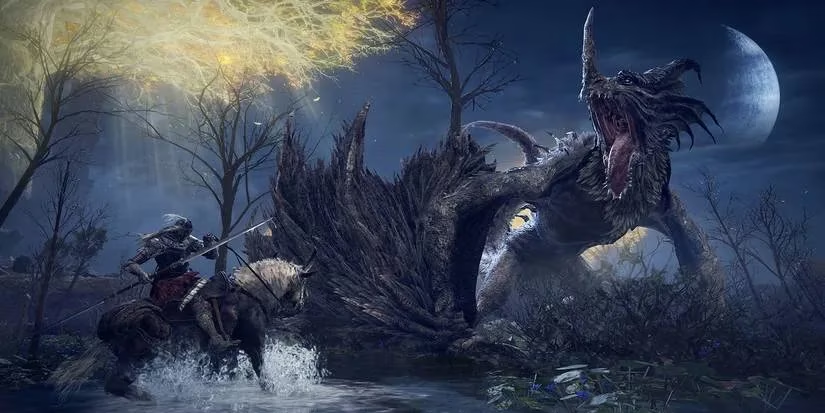
I can't end without a Souls-like. FromSoftware's Elden Ring turned horror into open-world scale. Riding through the Lands Between, I saw golden trees and also plenty of creatures designed to make me disconnect my controller from existence. George R. R. Martin helped build a world that keeps whispering one thing: you are not meant to be here.
As the Tarnished, I defeated demigods, repaired the Elden Ring, and still ended each session questioning my life choices. Six endings exist, but every one of them tastes like sorrow mixed with lake water.
In 2026, horror RPGs still feel rare. But these ten games prove the genre can be terrifying and thoughtful, sometimes in the same breath. And honestly? That's why I keep coming back — even when the dungeon laughs at me.