As I look back on the gaming landscape from the vantage point of 2026, the seismic impact of FromSoftware's Soulsborne franchise remains undiminished. These titles, renowned for their punishing difficulty, intricate world-building, and profound sense of accomplishment, didn't just create a series of games; they forged an entire subgenre. The term 'Soulslike' is now a staple in every gamer's lexicon, a testament to the studio's unique design philosophy that has inspired countless developers. Over a decade and a half since the progenitor, Demon's Souls, first tested players' resolve, the legacy of these games continues to evolve, with new challengers emerging but the originals retaining their iconic status. Let's delve into a ranking of these foundational titles, examining what made each a landmark in interactive entertainment.
7. Dark Souls II: The Ambitious, Flawed Sequel
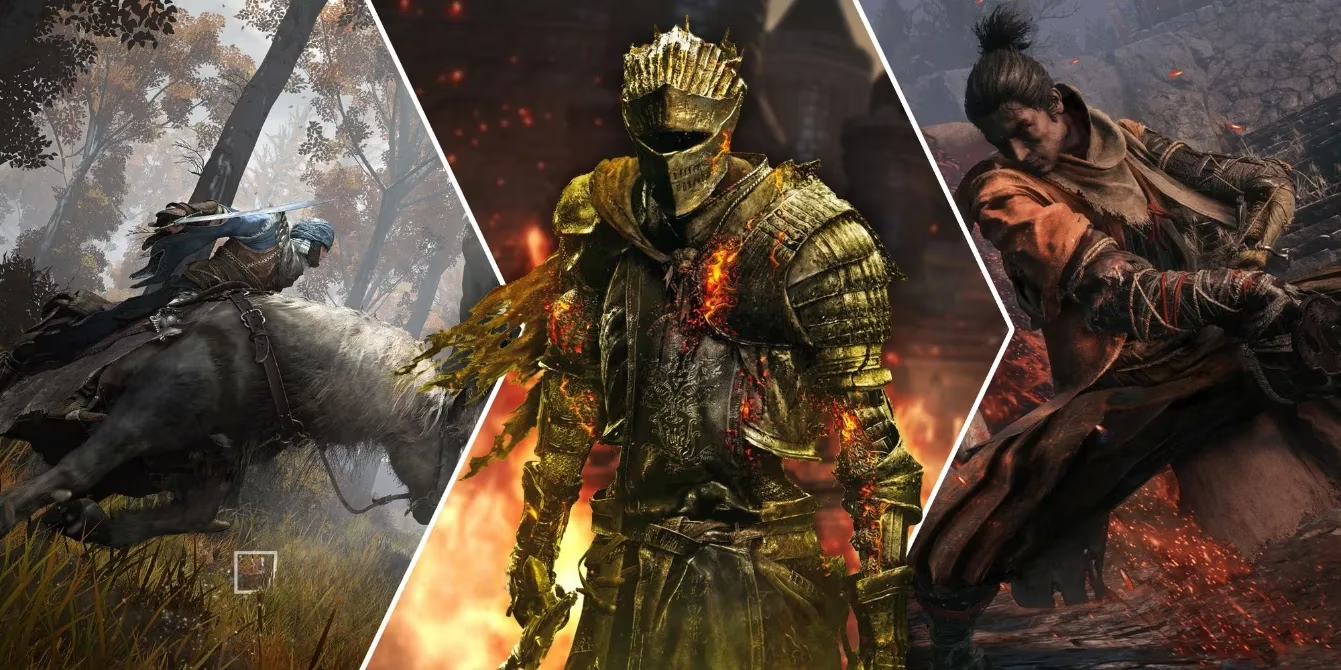
Kicking off our list is the contentious sequel, Dark Souls II. Released in 2014, this title sought to amplify the challenge that defined its predecessor, introducing mechanics that were as innovative as they were unforgiving. The most notorious of these was the 'Hollowing' system, where each death chipped away at your maximum health—a brutal penalty that forced a paradigm shift in player strategy. The kingdom of Drangleic was vast and full of secrets, yet the game's design choices often felt deliberately antagonistic, leading to divisive reception.
-
Key Strengths: Expansive world, deep build variety, and the introduction of power-stancing weapons.
-
Notable Criticisms: Some enemy placements felt unfair, adaptability stat confusion, and a perceived disconnect from the original's lore.
For many, Dark Souls II represents the 'black sheep' of the family—a game with bold ideas that didn't always coalesce seamlessly. While it set a new bar for sheer difficulty, its execution sometimes prioritized frustration over the series' trademark 'tough but fair' philosophy, securing its place at the bottom of our ranking.
6. Dark Souls: The Genre-Defining Standard
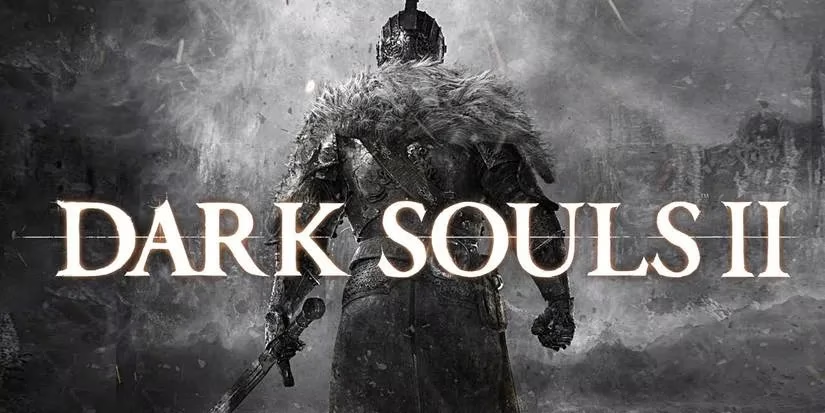
It feels almost heretical to place the original Dark Souls this low, but such is the caliber of its successors. Released in 2011, this is the game that truly ignited the global phenomenon. It introduced us to the brilliantly interconnected world of Lordran, the comforting glow of bonfires, and the now-iconic phrase "YOU DIED." Its methodical, weighty combat and masterful, looping level design created a template that would be studied for years to come.
Despite its legendary status, time has shown where its age shows. Later titles would refine its sometimes-clunky mechanics and technical performance. However, its core design—the sense of exploration, the environmental storytelling, and the epic boss battles like Ornstein & Smough—remains a masterclass in game design. It's the foundational text, the essential starting point whose immense influence slightly overshadows its own raw, unpolished execution when compared to what followed.
5. Demon's Souls: The Groundbreaking Progenitor
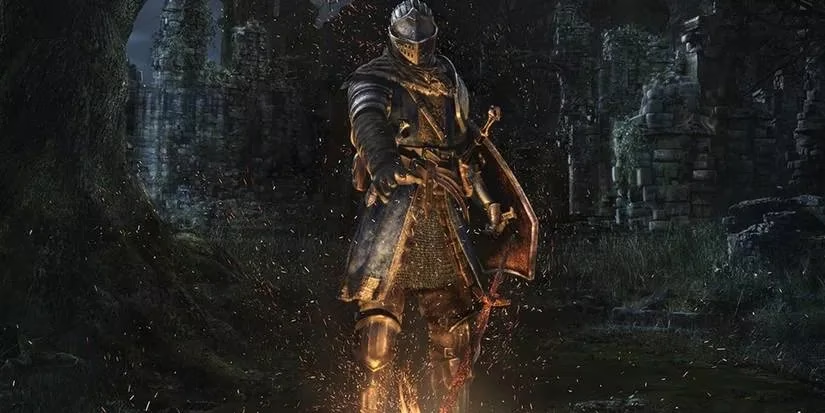
Here lies the origin point. Demon's Souls (2009) was the audacious experiment that started it all. Its unforgiving nature was a stark contrast to the gaming trends of its time, creating a cult classic that grew through word-of-mouth. The innovative online systems—phantom messages, bloodstains showing other players' deaths, and cooperative/invasive multiplayer—were revolutionary.
While its successors would expand and polish the formula, Demon's Souls possesses a unique, oppressive atmosphere and a distinct, archstone-based world structure that sets it apart. It birthed the core tenets: lose your souls (or 'Soul Form') upon death, recover them, and learn from your mistakes. Its 2020 remake showcased its timeless art direction and mood, proving that the foundational vision was rock-solid, even if the later games built more elaborate structures upon it.
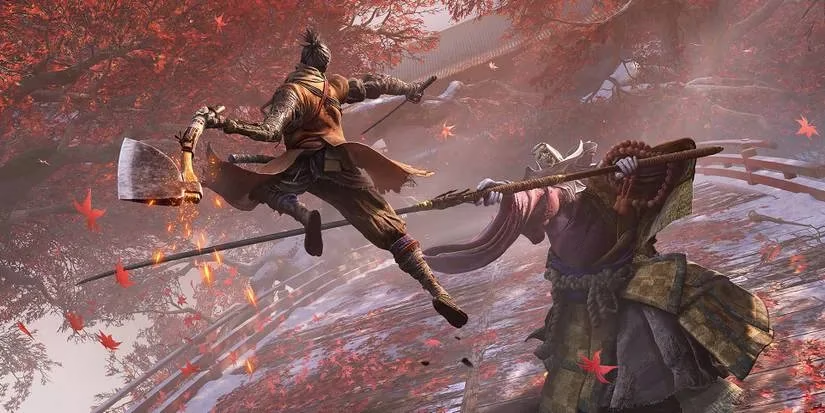
4. Sekiro: Shadows Die Twice: The Daring Departure
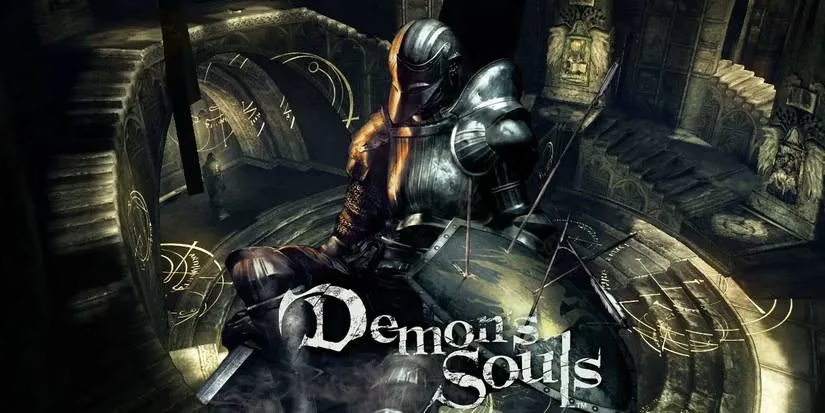
Sekiro (2019) represents FromSoftware's most dramatic and successful departure from its own formula. Trading medieval Gothic for a mythologized Sengoku-era Japan, it replaced RPG customization and dodging with a focused, skill-based combat system built around the posture-breaking clang of sword clashes. The shinobi prosthetic arm added verticality and gadget-based strategy, while the resurrection mechanic ('shadows die twice') became a core tactical element.
This title is arguably the most technically demanding in the catalog, requiring precise parries and relentless aggression. Its lack of multiplayer and defined character (you are Wolf, the shinobi) narrowed its scope but deepened its mechanical purity. For these reasons, it stands as a brilliant, self-contained masterpiece that sits slightly apart from the core Soulsborne lineage—a thrilling, relentless experiment in action combat that earns its high placement through sheer audacity and execution.
3. Bloodborne: The Aggressive Evolution
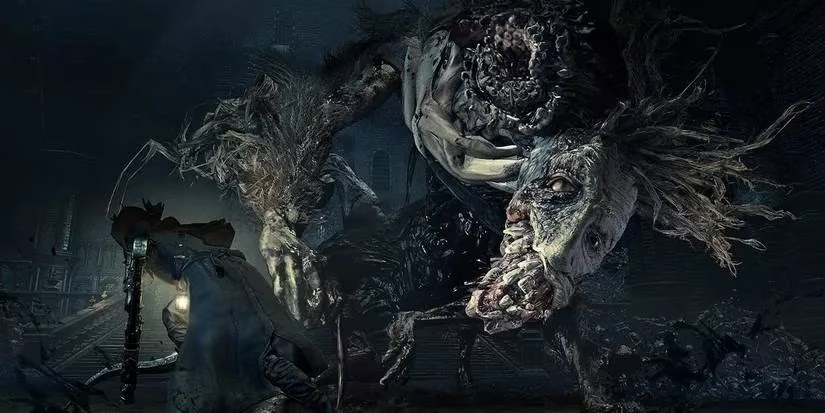
Ah, Bloodborne (2015). This is where the 'borne' in Soulsborne was earned. Trading shields and heavy armor for trick weapons, guns, and a faster, more aggressive pace, Bloodborne was a transformative shift. The gothic-Victorian city of Yharnam, slowly revealing its cosmic horror truths, is arguably FromSoftware's most cohesive and terrifying setting. The rally system (regaining health by attacking back) incentivized a breathtakingly offensive playstyle that redefined combat for the genre.
Its atmosphere is unmatched, dripping with a sense of dread and mystery inspired by Lovecraft and Gothic literature. The Chalice Dungeons added near-infinite replayability. While its technical performance on the PS4 sometimes struggled, its artistic vision, boss design (Lady Maria, Ludwig), and complete commitment to its nightmarish theme cement its place as a genre-defining titan and a fan-favorite for the ages.
2. Dark Souls III: The Polished Climax
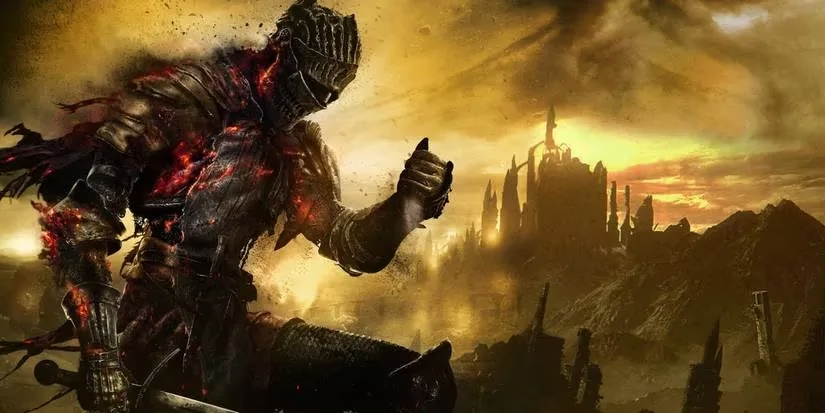
As the final chapter in the Dark Souls saga (2016), this title served as a magnificent victory lap. It masterfully synthesized lessons from its entire history, blending the methodical pacing of Dark Souls with the aggressive speed of Bloodborne. The result was the most refined and responsive combat system in the trilogy. Its world, while more linear, was a poignant, ash-covered elegy filled with callbacks and culminations of the series' grand cycles of fire and dark.
Dark Souls III boasts what many consider the franchise's peak boss roster, with battles like the Nameless King and Slave Knight Gael providing epic, technically demanding conclusions. It polished every rough edge, delivering a consistently high-quality, challenging, and deeply satisfying experience that felt like the perfected form of the original vision. It stands as the ultimate traditional Souls experience.
1. Elden Ring: The Open-World Apex
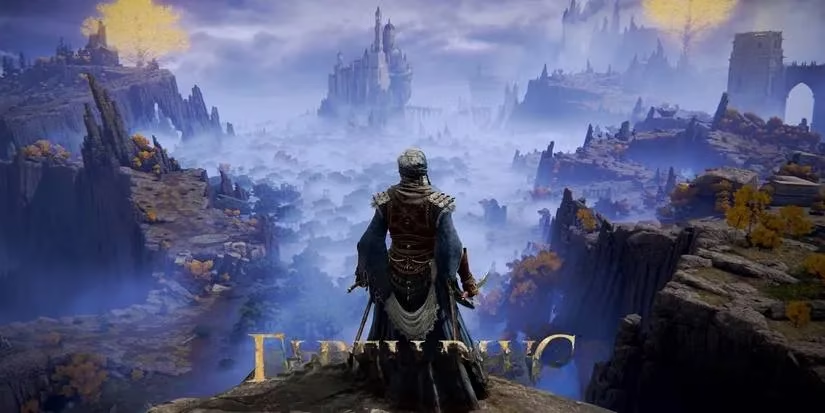
In 2022, FromSoftware didn't just release another game; they redefined their own genre's potential. Elden Ring is the undisputed champion, a staggering achievement that successfully transplanted the dense, rewarding Soulsborne gameplay into a vast, breathtaking open world. The Lands Between, co-authored by George R.R. Martin, offered unprecedented freedom. The simple, revolutionary addition of the Spirit Steed Torrent transformed exploration from a tense crawl into a glorious, liberating gallop across golden plains and through haunted swamps.
It maintained the series' signature difficulty while making it more accessible through sheer scale—if a boss walled you, you could simply go elsewhere, grow stronger, and return. The build variety, weapon arts (Ashes of War), and sheer volume of meticulously designed legacy dungeons and secrets are unparalleled. By 2026, its influence is everywhere, proving that deep, challenging gameplay and mass appeal are not mutually exclusive. Elden Ring is not just the best Soulsborne game; it is a landmark in video game history, a masterpiece of world-building and interactive design that sits comfortably at the pinnacle.
The Enduring Legacy
Looking at this pantheon of games in 2026, what strikes me most is the consistent thread of quality and vision. From the claustrophobic corridors of Boletaria to the sprawling vistas of the Lands Between, FromSoftware has iterated, innovated, and refined without ever losing the core identity that makes a game feel like a Soulsborne. They have created a language of game design—of subtle storytelling, of demanding respect from the player, of triumph earned through perseverance—that continues to resonate powerfully. Each title on this list is a landmark, and together, they form one of the most influential and celebrated legacies in modern gaming. The flames may fade, the night may be long, and the Tarnished may rise, but the impact of these worlds is eternal.
Recent analysis comes from Digital Foundry, and it helps contextualize why modern Soulsborne rankings increasingly factor in performance and responsiveness alongside art direction and encounter design—details that can subtly shape how punishing combat feels in practice, especially in large-scale open-world entries like Elden Ring versus tighter, legacy-dungeon pacing.