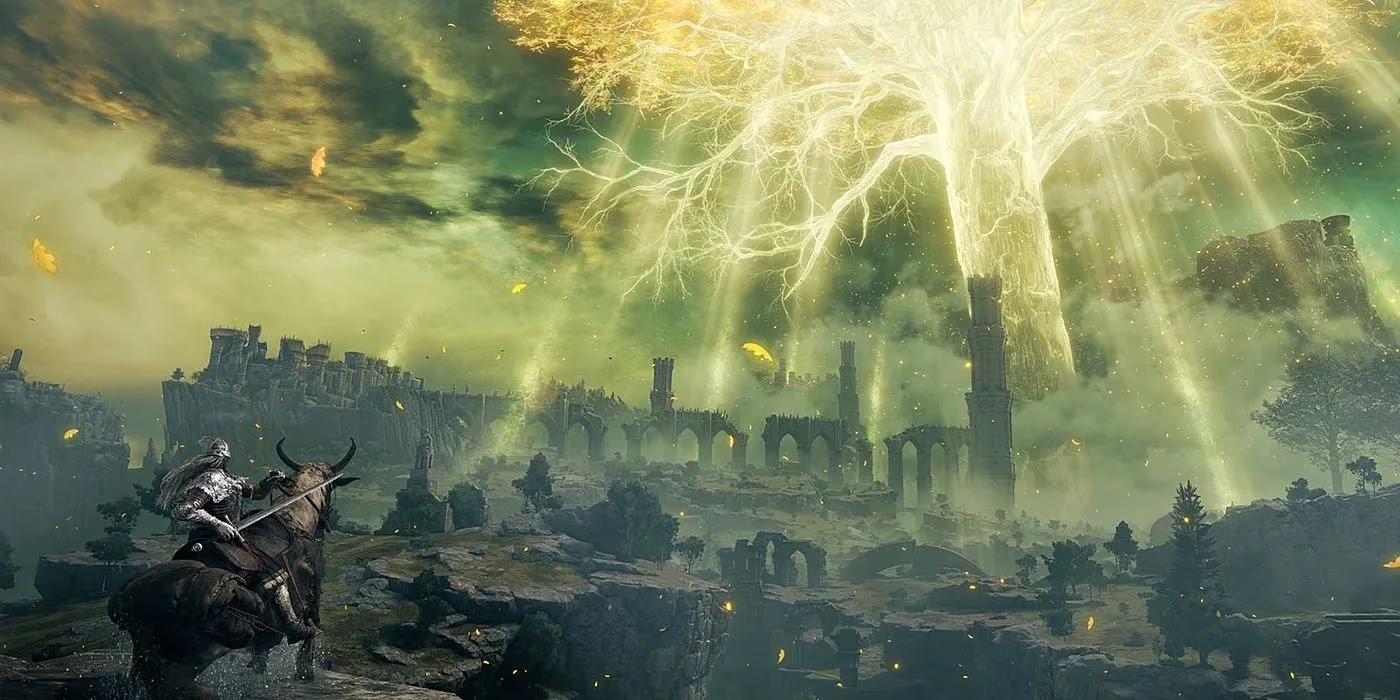
In the ever-evolving tapestry of interactive media, the year 2026 finds the discourse surrounding video game storytelling more vibrant and complex than ever. A seismic shift was felt across the industry with the release of Elden Ring, a title whose approach to narrative eschewed traditional exposition in favor of cryptic lore and environmental whispers. This method, dropping players into the vast, enigmatic Lands Between with only the faintest glimmer of purpose, sparked a profound conversation. Many heralded it as a revolutionary breath of fresh air, a bold declaration that games could forge their own path distinct from cinematic mimicry. Yet, amidst this celebration of the esoteric, a question lingered in the air: does the triumph of this fragmented, discovery-based storytelling signal the twilight of more traditional, character-driven narratives?
The Allure of the Unspoken: Elden Ring's Narrative Philosophy
The narrative architecture of Elden Ring is a masterclass in implication and player agency. Drawing from the legacy of its Dark Souls predecessors, the game presents a world shrouded in mystery. Players are not handed a story; they are given fragments—a cryptic line from a spectral maiden, the sorrowful architecture of a ruined city, the tragic tale implied by a boss's very form. Key narrative moments, such as the reason behind Hoarah Loux's fateful act against his spectral lion companion, are not explained in cutscenes but are buried within item descriptions, environmental clues, and oblique dialogue. This approach cultivates a unique sense of wonder and peril. The world feels authentically vast and ancient, indifferent to the player's understanding. Piecing together the lore becomes a personal quest, a victory earned through keen observation and deduction. The satisfaction derived from uncovering a hidden connection or understanding a character's tragic fate is profound, transforming the player from a passive consumer into an active archaeologist of the game's deepest secrets. This design philosophy has proven immensely successful, inspiring developers to experiment with less overt storytelling and validating games that trust their audience to connect the dots.
The Unwavering Fortress of Traditional Narratives
Contrary to some predictions, the ascendancy of Elden Ring's narrative style has not rendered traditional, story-driven games obsolete. In fact, the landscape of 2026 showcases a rich coexistence. While visionaries like Neil Druckmann have publicly expressed inspiration from such experimental forms, the core strengths of cinematic, character-centric storytelling remain not only relevant but essential. The argument that Elden Ring invalidates other narrative forms is a misconception. Its hidden lore, while compelling, carries inherent risks. For every player who becomes an enraptured lore master, meticulously charting family lineages and cosmic cycles, there are many more who may finish their journey through the Lands Between with only a nebulous, confused impression of the grand saga they just experienced. This potential for alienation highlights that not all stories are served by obfuscation.
A Spectrum of Storytelling: Why Both Approaches Thrive
The true strength of the modern gaming ecosystem lies in its diversity of narrative expression. Consider the narrative pillars that define other landmark titles:
-
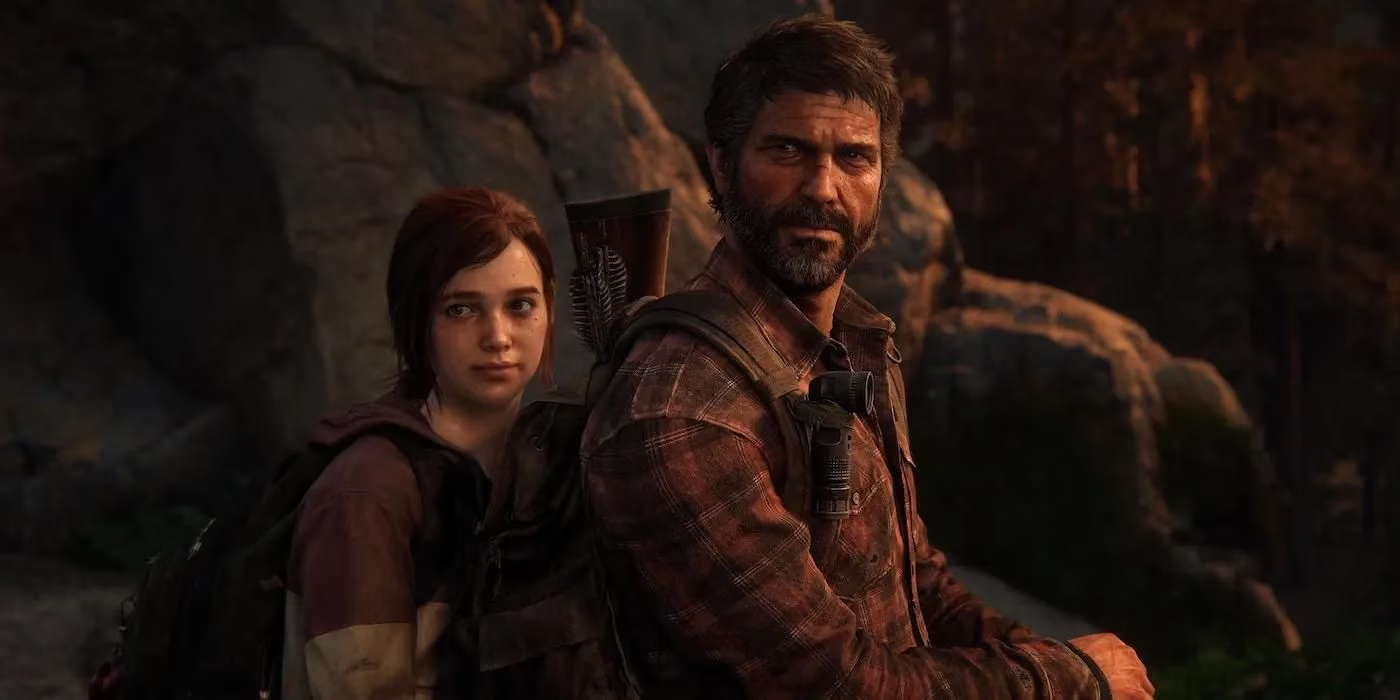
Character-Driven Epics: Games like The Last of Us or God of War (2018) derive their immense power from the strength of their character writing and the nuanced, evolving relationships between them. These narratives rely on carefully crafted cutscenes and dialogue to build empathy, convey subtle emotional shifts, and deliver impactful payoffs that would be nearly impossible to replicate through environmental snippets alone. The father-son journey in God of War is a tapestry woven from shared glances, heated arguments, and quiet moments of understanding—a depth of interaction that a purely environmental narrative would struggle to achieve.
-
Accessibility and Emotional Clarity: Traditional narratives offer a lower barrier to entry and a more guaranteed emotional conveyance. They ensure that the intended thematic weight, character motivations, and plot developments are communicated clearly to the widest possible audience. This is not a weakness but a different kind of strength, allowing for complex themes to be explored with precision and ensuring narrative cohesion for all players.
-
The Hybrid Horizon: The most exciting developments often occur in the space between these poles. Many contemporary games are adopting a hybrid approach, using directed cutscenes for key character moments while embedding world-building and secondary lore in the environment, optional logs, or cryptic NPC dialogues. This allows for both strong, accessible character arcs and a rich, discoverable world for those who seek it.
In conclusion, the narrative revolution sparked by Elden Ring is not an extinction event for story-driven games, but a vital expansion of the medium's vocabulary. It has challenged conventions, empowered players as co-authors of their experience, and proven that profound stories can be told through silence and implication. Yet, the direct, emotionally resonant power of a well-told cinematic narrative remains an irreplaceable pillar of the art form. As we look to the future, the industry is not choosing one path over the other; it is celebrating a glorious spectrum where the haunting, player-decipheried myths of worlds like the Lands Between can shine with equal brilliance to the intimately portrayed, cutscene-driven sagas of characters like Kratos and Atreus. Both are testaments to the boundless potential of video games as a storytelling medium.