In the world of video games, we often accept clunky mechanics as just the way things are. For decades, the standard for reviving a fallen teammate in cooperative play was a tedious, passive affair—run over, hold a button, and pray you don't get smacked. It became a necessary evil, a design quirk we all just learned to live with. But sometimes, you don't realize how painful something is until someone shows you a better way. That moment of revelation hit hard during a 2026 preview of Elden Ring: Nightreign, which unveiled its most ingenious and, frankly, hilarious invention: to save a downed ally, you have to attack them. It sounds bonkers, but trust me, it's a game-changer that makes every other co-op game's revive system feel like it's stuck in the dark ages.
The Stab of Salvation
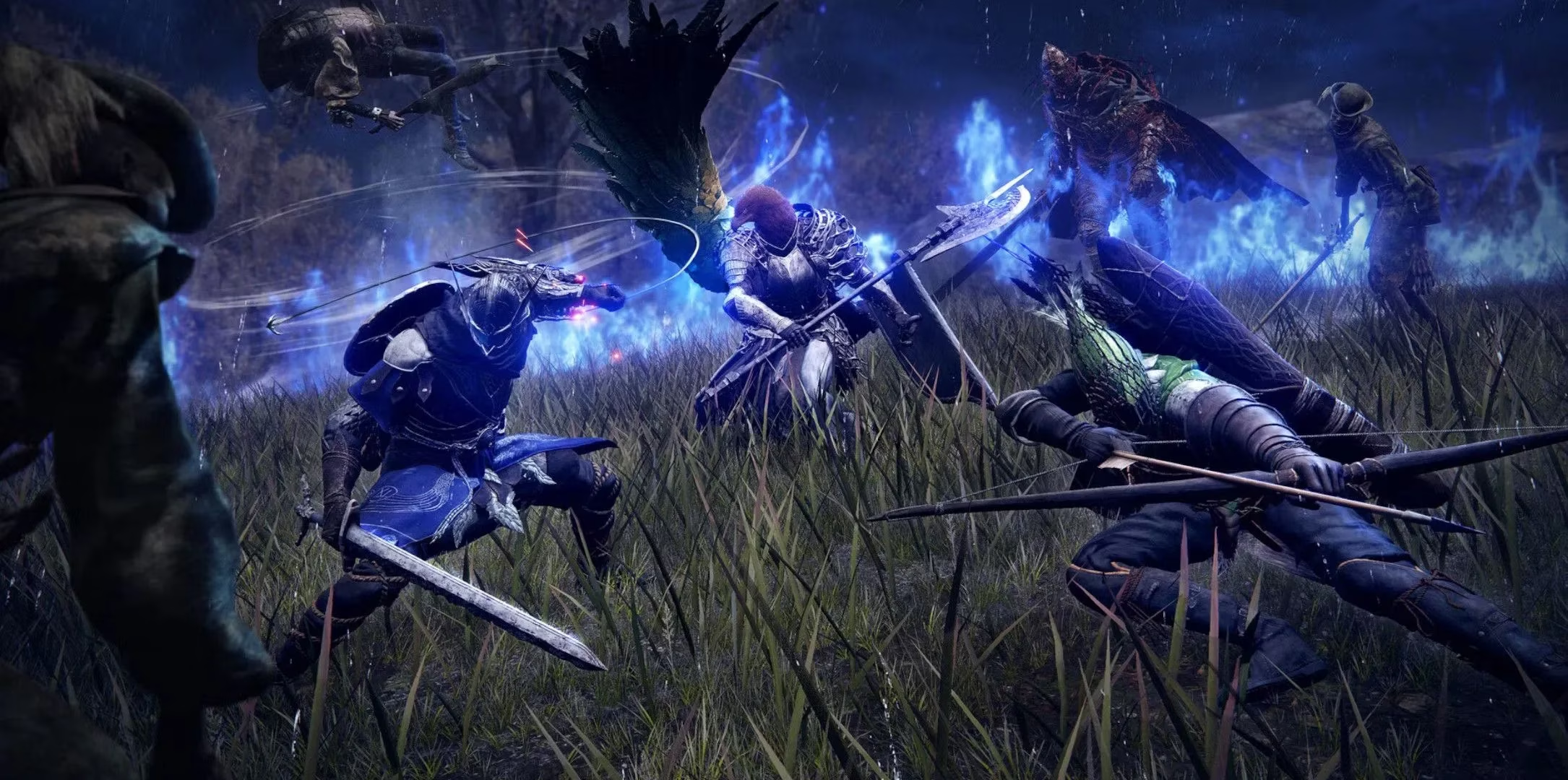
Let's be real: the old way of picking up a buddy stinks. You've been there—frantically searching for the sweet spot to trigger the prompt, watching a progress bar crawl while a boss looms, or having the whole thing glitch out for no good reason. It's a tense moment, sure, but is it fun? Is it a skill-based interaction? Nah, it's mostly just annoying. Nightreign throws that whole tired script out the window. When your homie hits the dirt, your new mission is to beat them back to life. That's right, pull out your sword and start swinging. The game literally turns 'friendly fire' into 'friendly revival.' It might not make logical sense—why would a giant hammer to the ribs heal anyone?—but who cares about logic when it feels this good? You gonna stand there arguing physics, or are you gonna stab that guy?
A Seamless Combat Extension
What makes this system so brilliant is how it blends perfectly with Nightreign's core Souls-like DNA. In these games, every action is a deliberate commitment. This new revive mechanic is no different; it's just another combat skill check woven into the fight.
-
It's Active: You don't disengage from the battle. You're not a helpless medic; you're a warrior multitasking between slaying monsters and resuscitating friends.
-
It's Strategic: Your downed teammate has a 'revive health bar' you need to deplete with attacks. Different attacks have different efficiencies. A quick slash might be safe but slow, while a heavy overhead smash is faster but leaves you wide open. You can even use a bow for a risky long-range rez!
-
It Scales: The more times someone falls, the bigger their revive bar gets, requiring more sustained effort. It's a simple, elegant punishment for repeated mistakes.
This approach fixes everything wrong with the old system. It keeps you in the action, tests your situational awareness and target prioritization, and turns a boring chore into a dynamic, skill-expressive moment. It's so obvious in hindsight—why shouldn't helping your friend be as engaging as fighting the boss?

The New Gold Standard
Looking at the co-op landscape in 2026, Nightreign's aggressive revival feels like a revelation we've been waiting for. For too long, the genre tolerated a half-baked mechanic because no one had a better idea. Now that the cat's out of the bag, the old 'hold X to revive' feels archaic, like trying to play a modern shooter without mouse look. It was a band-aid solution that overstayed its welcome by about two console generations.
The beauty of this system is its sheer audacity and the sheer fun it injects into a tense moment. The panic, the laughter, the shouted commands—'Hit him harder!'—it creates memorable stories. It turns a failure state into an active, collaborative puzzle. You're not just waiting; you're doing. And sometimes, in the heat of battle, the line between helping and hurling your friend's corpse across the room with an ultra-greatsword becomes beautifully, chaotically blurred. That's the magic of it.
In the end, Elden Ring: Nightreign has done more than just add a cool feature; it has reframed a fundamental co-op interaction. It proves that even the most entrenched game design conventions can be re-examined and improved with a little creativity and a willingness to let players beat the life back into each other. Once you've experienced it, there's no going back. If a game doesn't let me save my buddies by bludgeoning them senseless, well, you can keep it. The future of co-op is here, and it's got a pointy stick.