As I reflect on my gaming journey, I realize that some of the most memorable—and frustrating—moments come not from the climactic final battles, but from those early encounters that catch you completely off guard. You know the feeling: you've just gotten comfortable with the controls, maybe cleared a few basic enemies, and then BAM—you're face-to-face with a boss that feels like it belongs in the endgame. These early-game bosses are ruthless teachers, forcing you to either adapt quickly or quit in frustration. But isn't that what makes them so compelling? They're not just obstacles; they're gatekeepers to the true heart of a game, testing your intuitive abilities from the very start.
I still remember my first encounter with The Root Pack in Cuphead. The game's charming 1930s cartoon aesthetic lulls you into a false sense of security, but these vegetables are anything but cute.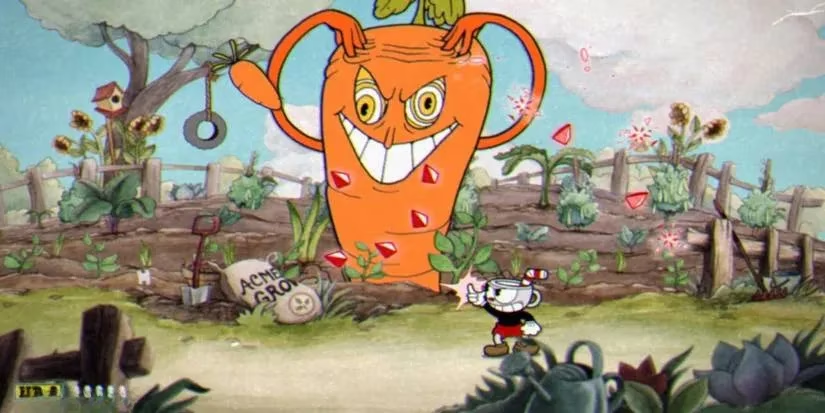
What makes them so challenging, even as the "easiest" bosses in the game? Their attacks are deceptively simple, yet each one deals massive damage if you mistime a dodge. The potato's tears, the carrot's homing missiles, the onion's... well, crying—they all require precise movement and quick reflexes. For a new player, this fight is a brutal introduction to Cuphead's core philosophy: perfection or death.
Then there's Lost Odyssey and its first boss, Grilgan. This towering dragon doesn't just hit hard—he gets stronger as the battle drags on. I learned this the hard way when he wiped my entire party with a single devastating skill.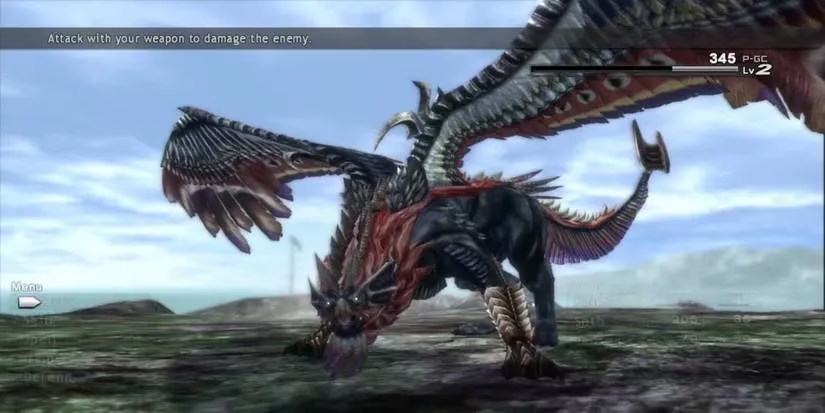
What's the community's consensus? Many consider him nearly impossible without proper preparation. But that's the beauty of it: Grilgan teaches you that in a JRPG, brute force isn't always the answer. You need the right equipment, the right skills, and the patience to grind if necessary. He's a wake-up call that sets the tone for the entire game.
Hollow Knight presents a different kind of early challenge with Soul Master. This optional boss is a spell caster with lightning-fast attacks that barely give you room to breathe.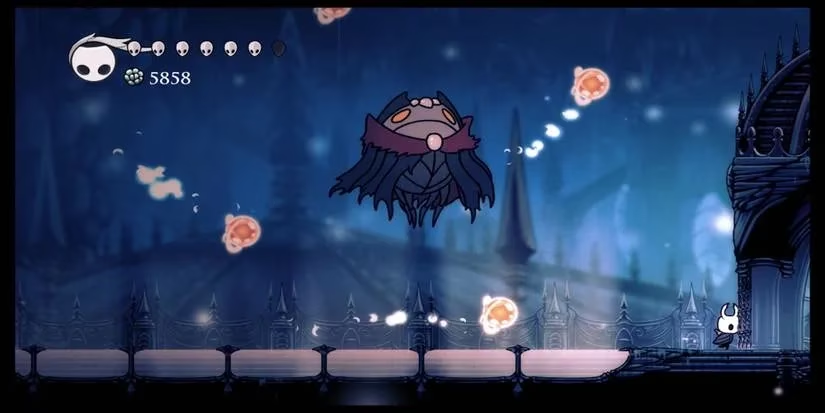
Why would anyone fight an optional boss so early? Because the reward—a useful ability—is worth the struggle. Soul Master tests your instincts in a way that mandatory bosses don't. You have to read his patterns, anticipate his teleports, and time your strikes perfectly. It's a dance of death that forces you to master the game's movement and combat mechanics.
In Hades, Megaera serves as the first major barrier in your escape from the underworld. As one of the Fury Sisters, she's born from Titan blood and fights with aggressive ruthlessness.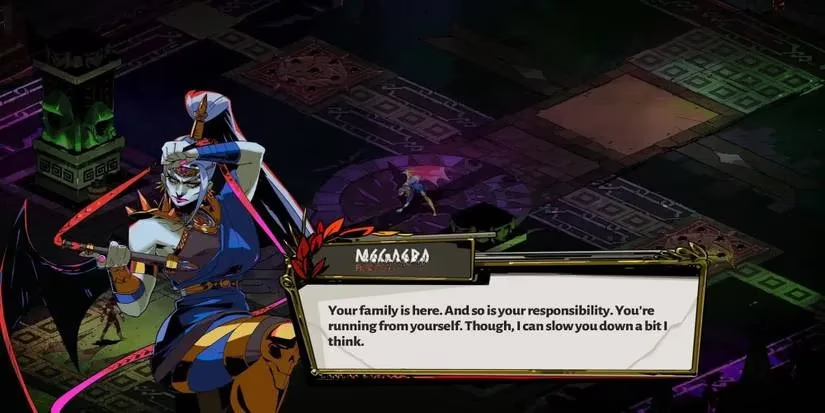
What's the best strategy against her? Keeping your distance and using ranged attacks. But even then, she'll chase you down with dash attacks and area-of-effect spells. Megaera teaches you the importance of positioning and resource management—lessons that become crucial as you face even tougher bosses later in your runs.
Now, let's talk about Sekiro: Shadows Die Twice and its infamous first boss, Genichiro Ashina. FromSoftware designed this encounter with the expectation that you'll lose—but defeating him is possible for skilled players.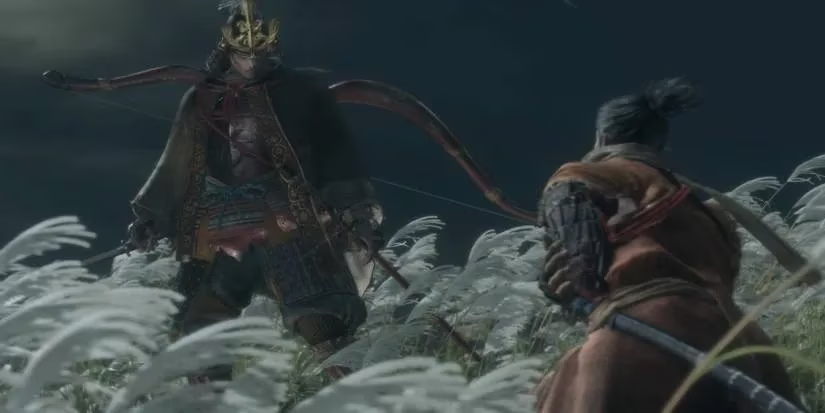
Why does this fight leave such an impression? Because it comes right after the tutorial, catching you completely off guard. Genichiro's speed and aggression force you to apply everything you've just learned about parrying and posture management. Even in defeat, he teaches you that in Sekiro, hesitation is defeat.
Elden Ring introduces the Tree Sentinel very early in the game—a heavily armored knight on horseback who can demolish you in seconds.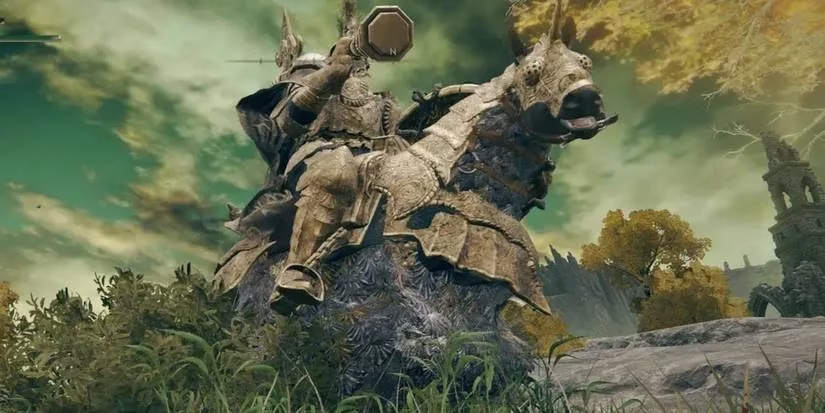
What's the lesson here? Sometimes, discretion is the better part of valor. The Tree Sentinel teaches you that not every enemy needs to be fought immediately. Elden Ring's open world allows you to come back when you're stronger, turning an impossible early challenge into a manageable—and satisfying—victory later on.
Devil May Cry throws Phantom at you relatively early, and this fiery spider demon sets the tone for the entire game.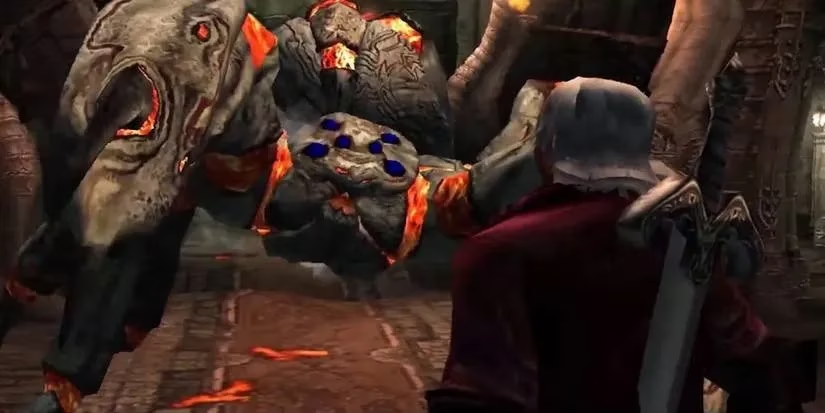
How do you handle a boss that can block most of your attacks? Constant movement and looking for openings. Phantom teaches you the importance of aggression and style—core tenets of the Devil May Cry series. He's a puzzle as much as a combat encounter, forcing you to think about positioning and attack patterns.
Dark Souls begins with one of the most iconic early boss encounters in gaming history: the Asylum Demon.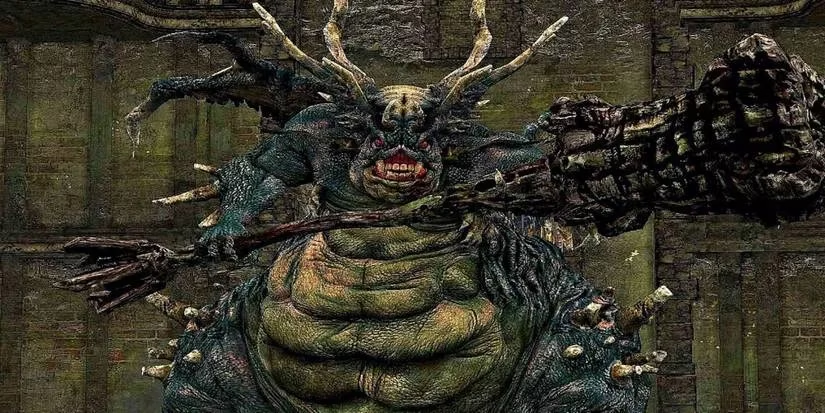
Why is this fight so memorable? Because with only a broken sword, you're clearly not meant to win—at least not immediately. The Asylum Demon teaches you the value of observation and environmental advantage. That plunge attack from above? It's a lesson you'll carry through the entire Souls series.
Bloodborne gives us Father Gascoigne, a tragic figure whose fight is as emotionally charged as it is difficult.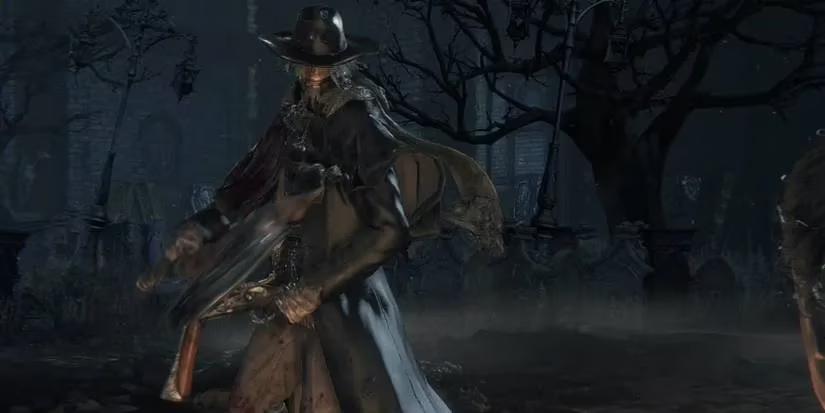
What makes him so challenging? His aggression never lets up, and his second phase transformation is downright terrifying. Gascoigne tests your ability to stay calm under pressure and use all the tools at your disposal—from the Tiny Music Box to environmental advantages. He's a brutal introduction to Bloodborne's fast-paced combat.
Finally, Demon's Souls features the Vanguard, a boss that can kill you in seconds and serves as a harsh welcome to the Soulslike genre.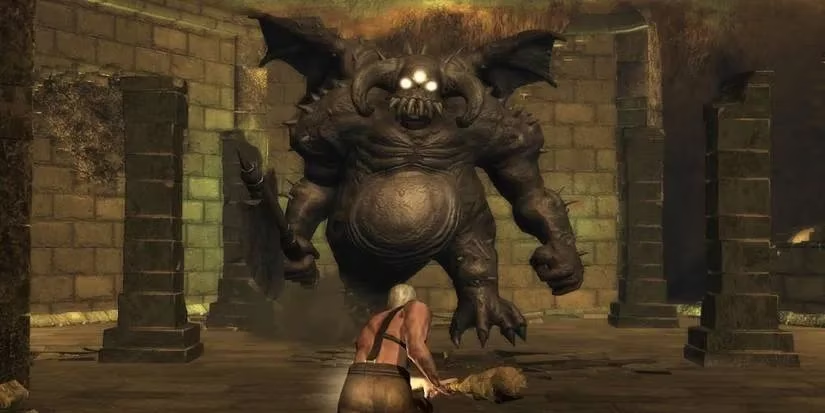
What's the cruel twist? Even if you manage to beat him, you still die and wake up in the Nexus. The Vanguard isn't just a boss; he's a statement about the game's philosophy. Death isn't failure—it's part of the learning process. His difficulty only scratches the surface of what's to come, preparing you for the challenges ahead.
Reflecting on these early-game bosses, I've come to appreciate their role in shaping us as gamers. They're not just difficult for the sake of difficulty; each one teaches valuable lessons:
-
Pattern recognition (Soul Master, The Root Pack)
-
Resource management (Megaera, Grilgan)
-
When to retreat and regroup (Tree Sentinel, Asylum Demon)
-
Using all available tools (Father Gascoigne, Phantom)
-
Perseverance through failure (Vanguard, Genichiro)
These bosses force us to grow, to adapt, and to think critically about our approach to games. They separate casual players from dedicated ones, not through arbitrary difficulty spikes, but through meaningful challenges that test our problem-solving skills as much as our reflexes.
As I look back on my experiences with these early-game walls, I realize they've fundamentally changed how I approach games. I'm more patient, more observant, and more willing to experiment with different strategies. Isn't that what good game design is all about? Creating challenges that frustrate us in the moment but make us better players in the long run?
So the next time you encounter an early boss that seems impossibly difficult, remember: you're not just fighting a virtual enemy. You're undergoing a rite of passage, learning lessons that will serve you throughout your entire gaming journey. And when you finally emerge victorious, that hard-earned victory will taste all the sweeter.