As I wander the fractured, golden landscapes of the Lands Between in 2026, my hand rests upon the familiar hilt of a longsword. Its weight is a known comfort, its moveset a practiced dance of slashes and thrusts. Yet, in quiet moments by the Sites of Grace, a deeper yearning stirs within this Tarnished soul. I gaze upon the arsenal I have collected—the colossal greatswords, the whirling curved blades, the staves humming with glintstone sorcery—and I cannot help but wonder: what if these instruments of war could transform? What if, with a flick of the wrist and a click of intricate mechanisms, a simple straight sword could unfold into a sweeping halberd, or a compact hammer could extend into a devastating flail? My mind drifts to a different dream, a haunting memory of Yharnam, where the very essence of combat was fluidity and terrifying invention. Could the genius of Bloodborne's trick weapons find a home here, in this age of the Erdtree?
The Homogenized Dance: Seeking Depth in a Vast Arsenal
Elden Ring's world is one of breathtaking scale and staggering variety. From the windswept cliffs of Limgrave to the floating ruins of Farum Azula, every corner promises discovery. Our armaments reflect this grandeur in number, yet sometimes, I feel the dance of combat can become... predictable. A greatsword swings with a certain heft, a katara with a specific grace. The Ashes of War system, a brilliant evolution of Dark Souls' Weapon Arts, grants us moments of spectacular flair—a phantom slash, a ground-shaking stomp. But these are often singular, attached skills. Once performed, we return to the core moveset. Is this the peak of our potential? Have we mastered all the forms our weapons can take?
Consider the arsenal we wield:
| Weapon Category | Typical Moveset Feel | "Unique" Variants Often Offer... |
|---|---|---|
| Colossal Swords | Slow, powerful overhead slams and sweeps. | A different Ash of War, or one altered heavy attack. |
| Katanas | Fast, slashing combos with inherent bleed. | A unique projectile skill or a special dash. |
| Thrusting Swords | Quick, precise pokes for dueling. | Extended range on a running attack or a multi-hit skill. |
This is not a critique of poverty, but a longing for richer texture. The foundation is masterful, but the ceiling for mechanical creativity feels within reach. When I find a weapon dubbed "unique," my heart leaps, only to often find its uniqueness confined to a single, special move. The core identity of a straight sword remains, well, straight. Where is the weapon that fundamentally changes what it means to be a sword?
The Yharnam Echo: A Lesson in Fluid Form
This is where the old blood sings its siren song. In that other nightmare, weapons were not just tools; they were living extensions of the hunter's will. The Saw Cleaver—a compact, brutal tool for close quarters—could, with a metallic shriek, transform into a longer, sweeping cleaver for crowd control. The Ludwig's Holy Blade presented as a noble longsword, but a twist of its handle revealed its true, monstrous form as a gargantuan greatsword, crashing down with the weight of a revelation. This was not merely an "alternate mode"; it was a seamless integration of two distinct fighting styles into a single, flowing combat philosophy.
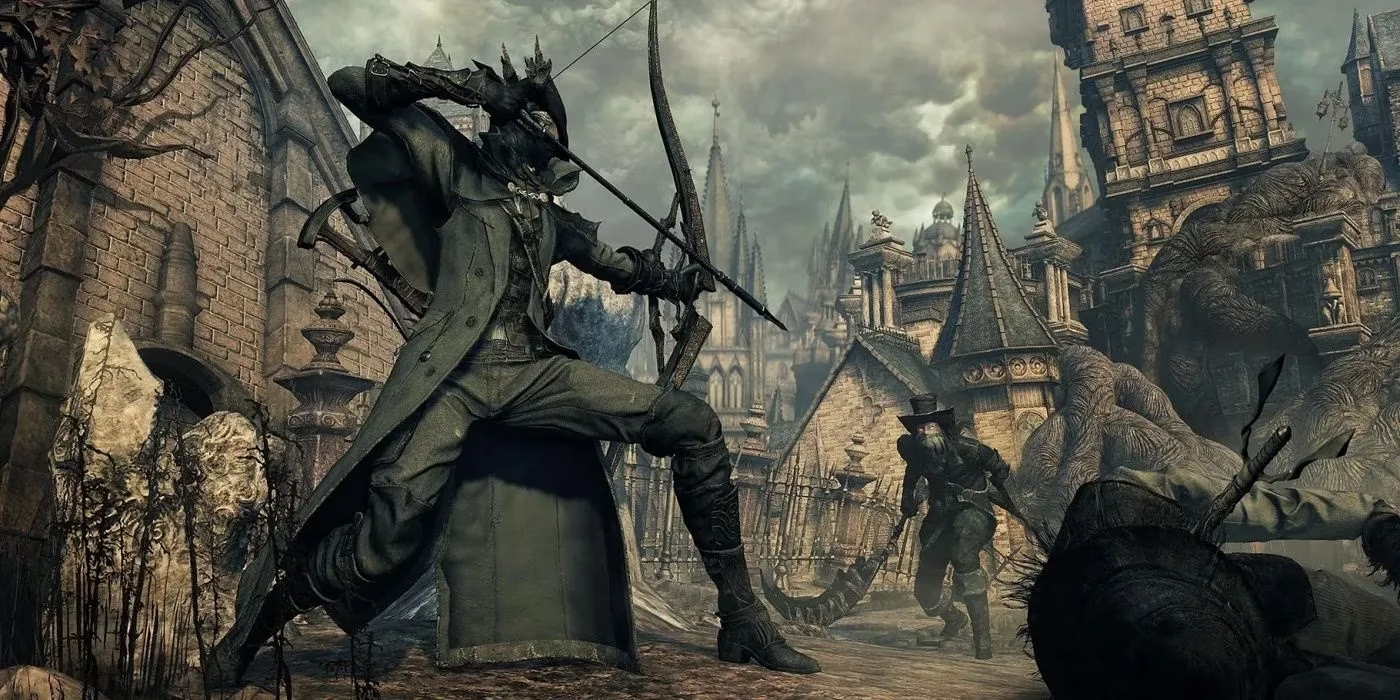
Imagine, for a moment, bringing that philosophy to the Lands Between. The Ash of War system is brilliant, but what if a weapon's true skill was its transformation? What if, instead of summoning a spectral glintblade, you could physically reconfigure your weapon, altering its reach, damage type, and entire moveset on demand? The tactical depth would be profound. Engage an agile foe with a swift spear, then, as they retreat, trigger the transformation into a sweeping axe to catch their roll. The very rhythm of PvP and challenging PvE encounters would be rewritten, demanding not just reaction, but anticipation and strategic form-shifting.
Weaving the New Thread: Integrating Trickery into the Golden Order
I hear the pragmatic whispers. "This is not Yharnam," they say. "Our world is one of golden light and primordial sorcery, not dark, mechanical grit." And they are right. The aesthetics must evolve. The transformations need not be of grinding cogs and hydraulic hisses, but of crystalline reconfiguration, Erdtree bark unfolding, or gravity magic collapsing metal into new, dense forms. A weapon forged by the Alabaster Lords might shift between a lightweight rapier and a mass-altered great hammer. A creation of the Crucible could morph from a swift claw to a tail-like whip, embodying the primordial forms of life.
Of course, integration poses its own puzzles. Would transformation replace the Ash of War slot? Perhaps for true trick weapons, it must—their shifting form is their ultimate skill. Could they block? Maybe in one form, but not the other, adding another layer of deliberate choice to each moment. And what of two-handing? Bloodborne sidestepped this, but here, perhaps transforming could automatically shift between one and two-handed stances, or offer a unique, blended moveset when two-handing a weapon in its secondary form.
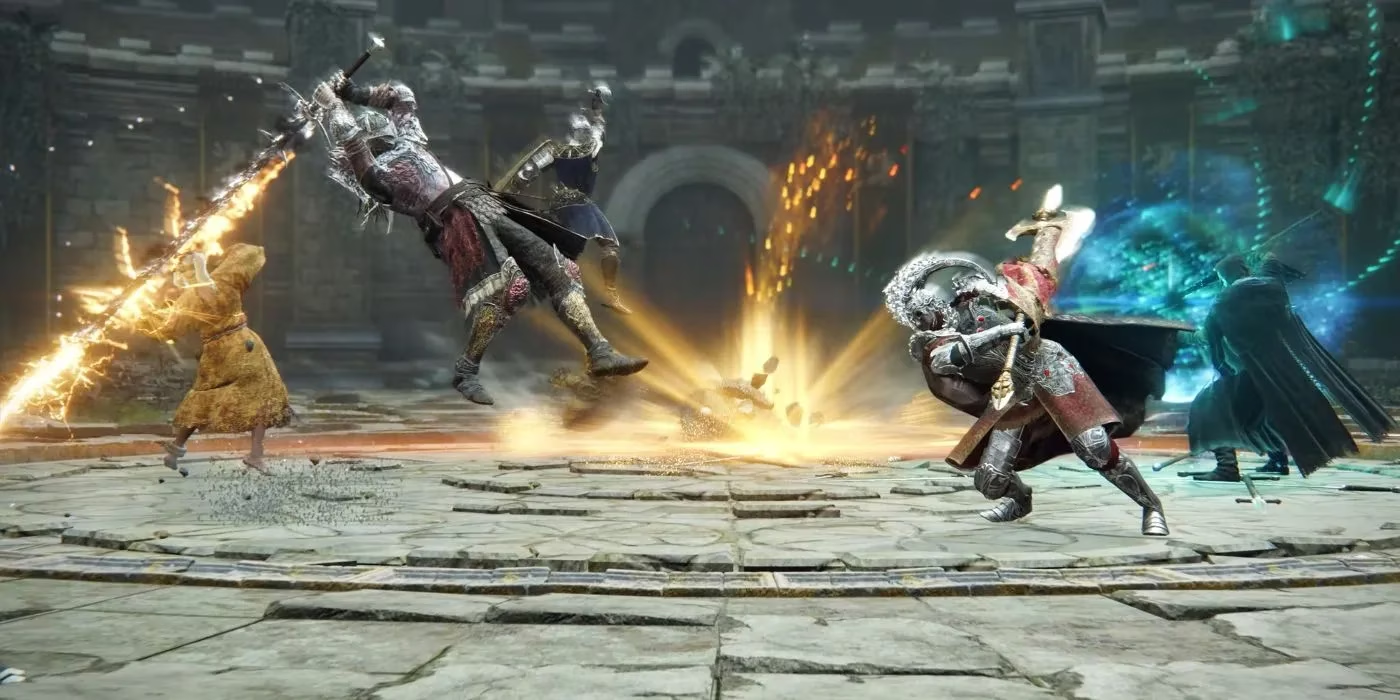
Yet, are these challenges not worthy? Look at the tools we already have! The Family Heads flail, the Ringed Finger that pointlessly pokes, the Envoy's Long Horn that bubbles foes into oblivion. Our world is already brimming with the bizarre and the unconventional. A sword that becomes a greatsword is, in many ways, less strange than a weapon made from the severed finger of a giant. The foundation for wonder is already laid.
The DLC Dream: A Forge for New Legends
FromSoftware's expansions have always been crucibles for their most legendary arms. Who can forget the first time they revved the Whirligig Saw and ground a beast into paste, or danced with the elegant, deadly duality of the Rakuyo? These were not mere stat upgrades; they were experiences that redefined combat. A future chapter in the Elden Ring saga—a journey to a new, shrouded domain—presents the perfect anvil upon which to hammer out such revolutionary arms.
Imagine descending into the heart of a forgotten, mechanized city beneath Leyndell, or a realm touched by the frenzied flame of transformation. There, we could find blueprints, or living metal, or a lost art of "Liquid Smithing." The quest wouldn't just be for a powerful weapon, but for the knowledge to make a weapon adapt. The boss guarding such a treasure wouldn't just be a test of might, but a preview of the fluid, unpredictable combat style it enables.
As the stars continue their slow turn over the Lands Between, my hope persists. The base game gave us a universe to explore. A future DLC could give us new ways to explore it—not just with new maps, but with new dimensions to our own combat artistry. To weave the transformative spirit of Bloodborne's trick weapons into the rich tapestry of Elden Ring would be more than an homage. It would be an evolution. It would grant us, the Tarnished, not just new tools, but new forms of expression in the endless, beautiful struggle beneath the Erdtree. The dream is alive. Let us hope the forging has already begun.