In the ever-accelerating river of technological progress, some components become stepping stones, remembered not for their raw power but for their enduring spirit. The Nvidia RTX 3050 and 3050 Ti laptop GPUs, whispers from a couple of generations past, now stand as humble custodians at the gates of vast, demanding worlds like Elden Ring Nightreign. They are no longer the vanguard, yet they persist, their capabilities a testament to the art of finding playable framerates through thoughtful compromise. For the player armed with these entry-level guardians, the journey through the Lands Between becomes a delicate dance between visual splendor and fluid performance, a quest to extract every last drop of potential from silicon forged in simpler times.

The Canvas of the RTX 3050: Weaving Performance from Modest Threads
Launched as an envoy for 1080p gaming, the RTX 3050 now navigates a landscape far more demanding than its original charter. In titles that embrace modern AI upscaling like DLSS or FSR, it finds a sympathetic ally. Yet, Elden Ring Nightreign, in its pure, unassisted form, offers no such technological crutch. Here, the GPU must stand alone, rendering each shadow, each blade of grass, with its own limited resources. The path to a stable, engaging experience is not one of maximalist settings, but of curated balance—a palette mixed from Low and Medium quality presets.
This approach is less about loss and more about focused gain. By relieving the GPU of the heaviest burdens, one unlocks a consistent 40-50 FPS performance, transforming a potentially stuttering slideshow into a fluid, explorable dream. The following configuration is a poet's recipe for playability, a map to navigate the graphical frontier:
Foundation Settings (The Frame's Architecture):
-
Screen Mode: Fullscreen – Claiming the entire canvas for immersion.
-
Display Output: Native Display – Honoring the panel's true resolution.
-
Limit Mouse Movement: On – A gentle tether to keep the cursor within the tale.
-
Resolution: 1920 x 1080 – The sweet spot, the native tongue of this GPU.
-
Auto-Detect Best Rendering Settings: Off – The artist, not the algorithm, must guide the hand.
Quality Palette (The Painter's Choices):
This is where the artistry of compromise truly shines. The goal is to preserve the soul of the scene while ensuring the story flows without interruption.
| Setting | Recommended Level | Poetic Rationale |
|---|---|---|
| Texture Quality | Low | Sacrificing distant detail to keep the immediate world crisp and clear. |
| Antialiasing Quality | Medium | A soft-focus filter on the world's jagged edges, a minimal performance cost for visual harmony. |
| SSAO (Screen Space Ambient Occlusion) | Medium | Suggesting depth and contact shadows without drowning the scene in costly darkness. |
| Depth of Field | Medium | A gentle blur for the distant horizons, focusing the eye on the peril at hand. |
| Motion Blur | High | A stylistic flourish that masks minor framerate dips with cinematic motion. ✅ |
| Shadow Quality | Medium | Preserving the shape and threat of shadows without rendering every nuanced gradient. |
| Lighting Quality | Medium | The essential glow of torches and grace, simplified but not extinguished. |
| Effects Quality | High | Magic and ash must feel impactful; this is where spectacle is worth the cost. ✅ |
| Volumetric Lighting | Medium | God rays and mist are atmosphere; here, they are hinted at, not fully realized. |
| Reflection Quality | Medium | Watery glances and metallic sheens, present but not mirror-perfect. |
| Water Surface Quality | High | The lakes and rivers of the Lands Between are central to its melancholy beauty. ✅ |
| Shader Quality | High | The fundamental language of surfaces and materials; do not mute this voice. ✅ |
| Global Illumination | High | The overall mood and color of the world; the essential lighting narrative. ✅ |
| Grass Quality | Medium | Fields may thin, but they remain fields, not barren plains. |
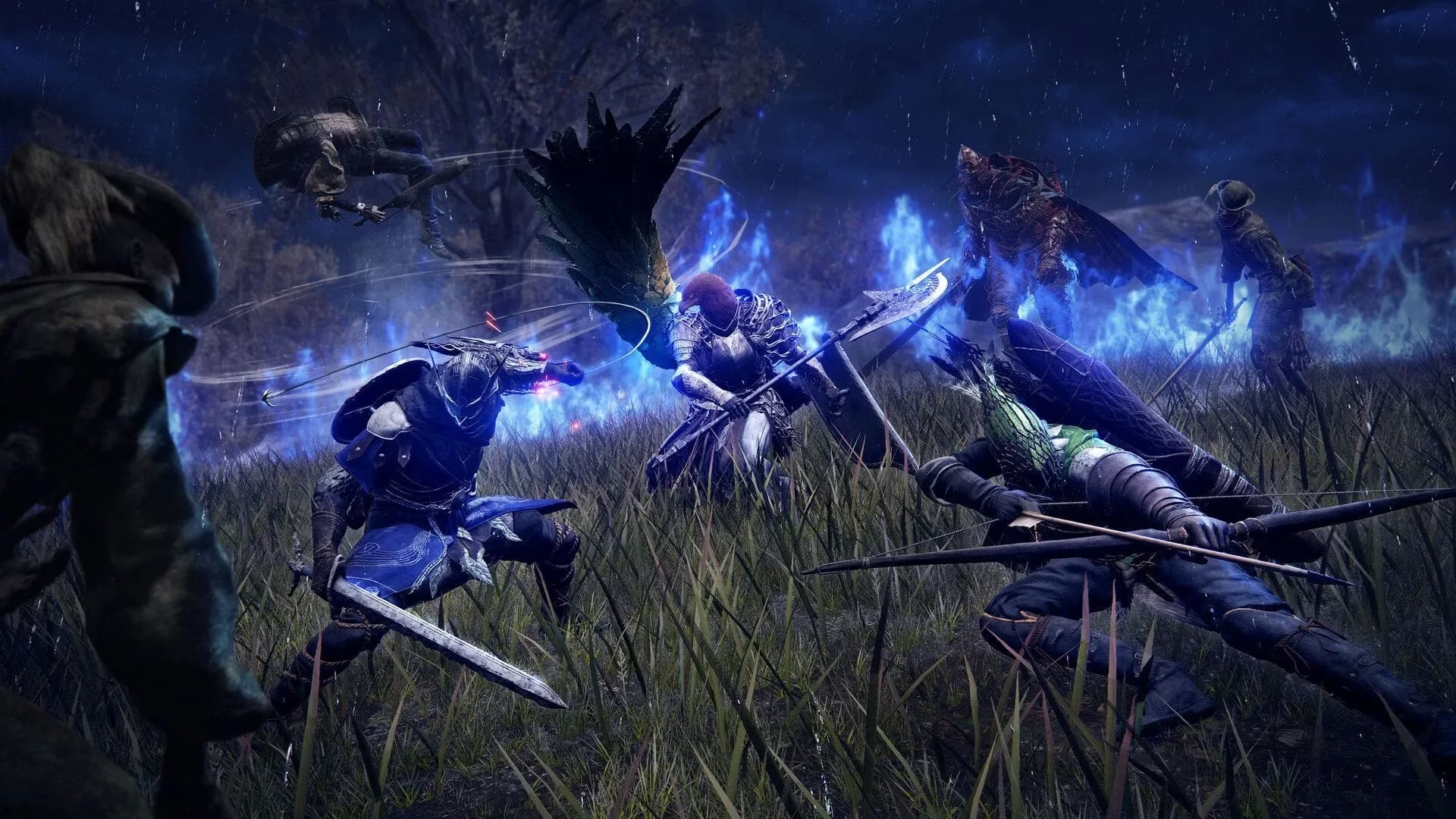
The Sibling's Song: The RTX 3050 Ti's Nuanced Refrain
The RTX 3050 Ti sings a similar, only slightly brighter, song. Its core limitation remains the same constricted 4 GB VRAM pool, a finite vessel for the game's vast textures and effects. Thus, expecting a dramatically different performance tier is a fantasy. The strategy, therefore, echoes that of its sibling: a harmonious blend of settings aimed at 1080p. However, a touch more headroom allows for a subtly richer visual texture in key areas.
For this GPU, the recommended path leans more confidently into Medium and even High settings for core visual elements, trusting its modestly stronger compute to maintain the crucial framerate. The foundational settings (Fullscreen, 1080p, etc.) remain identical—the stage is the same, but the lighting is slightly more generous.
The 3050 Ti's Enhanced Quality Palette:
Here, the philosophy shifts from preservation of basics to enhancement of identity. The goal is to make the world feel more tangible.
-
Texture Quality: High – The world's skin can be more detailed, its stones more gritty, its fabrics more woven.
-
Antialiasing Quality: High – Edges soften further, reducing visual noise and distraction.
-
SSAO, Depth of Field, Shadows, Lighting: High – Depth, focus, and mood are amplified. The world gains weight and dimension.
-
Motion Blur, Effects, Water, Shaders, Global Illumination: High – These cinematic and core visual elements remain at their peak, as they define the game's feel. ✅
-
Volumetric Lighting & Reflections: High – The atmosphere thickens; puddles and armor gain a more believable presence.
-
Grass Quality: High – The landscapes breathe with fuller, more abundant foliage.
This configuration is an attempt to let the 3050 Ti express its slight advantage, painting a world that feels less like a compromise and more like a deliberate, slightly stylized version of the developer's vision.
Epilogue: The Enduring Spirit of Entry-Level Guardians
As of 2026, the RTX 3050 and 3050 Ti are not champions of benchmarks. They are, instead, testaments to accessibility and optimization. Their continued ability to run a title as expansive as Elden Ring Nightreign speaks to a timeless truth in gaming: raw power is but one path to enjoyment. The other is the intelligent allocation of resources, the careful tuning of a digital canvas until it sings in harmony with its hardware.
These GPUs teach a lesson in value and resilience. They remind us that the heart of an adventure is not solely in the number of polygons or the fidelity of ray-traced reflections, but in the consistency of the journey, the fluidity of combat, and the ability to get lost in a world without technical intrusion. For the player wielding these legacy chips, Elden Ring Nightreign remains a vast, conquerable poem—its stanzas may be rendered with slightly simpler metaphors, but its epic rhythm and profound beauty are undiminished. The Tarnished may journey with a slightly less ornate sword, but the Lands Between, in all its haunting glory, remains open to explore.